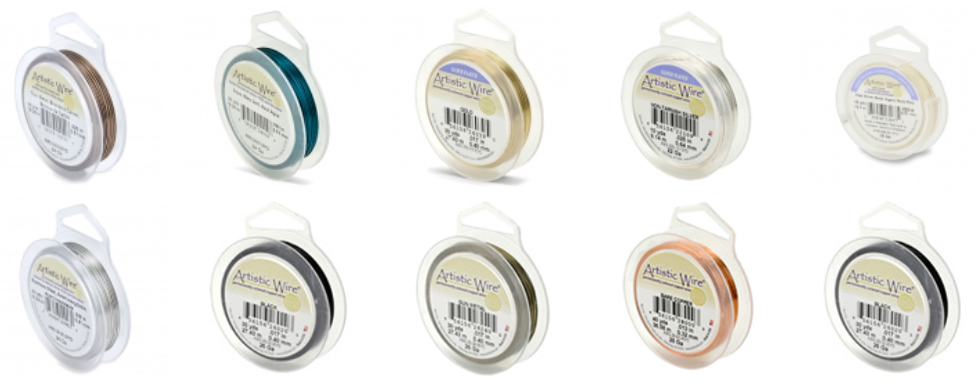
Flexible wire or metal wire
If you want to create beautiful designs with flexible wire, you’ll want to consider Artistic Wire or metal wire from Beadalon or Knorr Prandell. Metal wire shouldn’t be confused with steel wire. Steel wire is used to string beads into a flexible necklace and is therefore not flexible. Beadalon and Knorr Prandell are high-quality, with Beadalon’s artistic wire being available in a wide variety of colors.
Hardness and shapes
Wire comes in three hardnesses: dead-soft, half-hard, and full-hard. Dead-soft is easy to bend, and all copper artistic wire (except stainless steel) is dead-soft.
Dead-soft creates softer curves and is ideal for creating spirals.
Half-hard is more difficult to bend. This allows you to create tighter corners with pliers. These are also used for wrapping wire or wrapping beads.
Half-hard is good for making components that need to retain their shape. Think of ear hooks, clasps, jump rings, necklaces, or bracelet shapes. Gold-filled and silver-filled are generally harder than dead-soft sterling silver. Stainless steel is even harder.
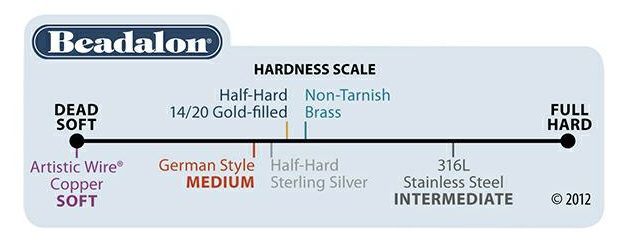
Semi-hard wire is more difficult to bend, which is common with German-style wire, non-tarnish brass, gold-filled wire, and sterling silver. Beadalon Artistic Wire comes in four shapes: round, semi-round, square, and twisted.
Techniques
Wire linking
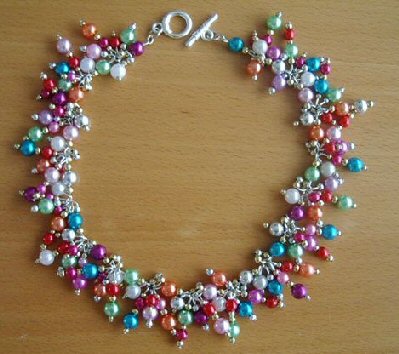
A versatile and easy technique using wire is headlocking. You can do this with ready-made headlocks and staples, but you can also make your own with wire. Be sure to choose a thicker wire (from 22 gauge or 0.6mm) because otherwise, it will bend too easily when you wear your jewelry.
Wire wrapping
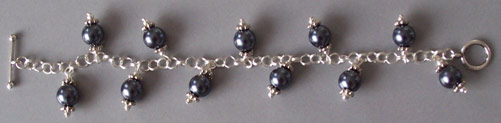
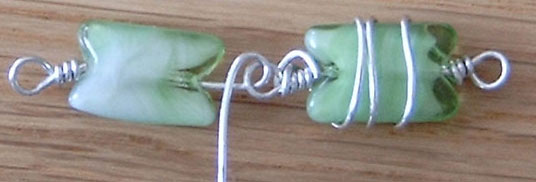
With this technique, you twist different thicknesses of wire into beautiful shapes around each other or around a bead. It’s much easier when you do it around a bead, a beautiful stone, or a cabochon, so if you’re just starting out, it would be a great starter project.
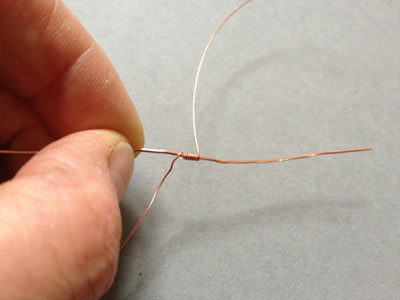
Twisting wire around other wire requires much more precision, because if you’re slightly off-center, it’s often immediately visible. Often, you have a thick base wire (from 12 to 18 gauge) around which you twist thinner wire (20 to 26 gauge).
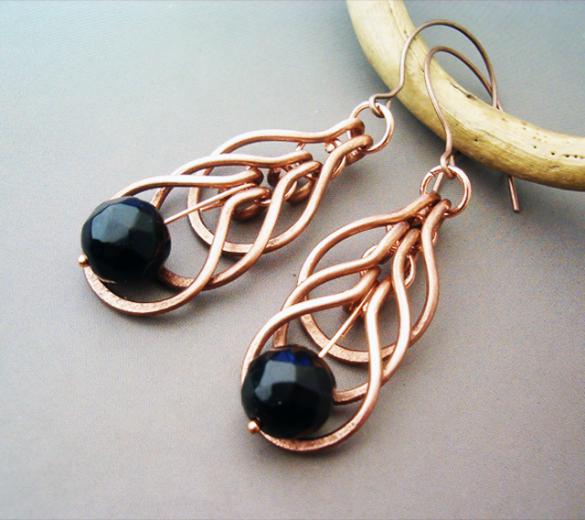
For cuffs or rings, for example, you can also hammer the wire, flattening it so it holds its shape extra well. You can also make beautiful earrings this way. Bend the wire into the desired shape and then flatten it. Because you’ve flattened it, it won’t be able to come out of that shape.
Use dead-soft wire for this, otherwise it will be too hard to hammer. You can use any thickness of wire. The thinner ones will finish faster and require fewer hammering strokes. The thicker ones will take a bit longer, but they offer more flexibility in how you hammer them. This allows you to adjust the shape and thickness more.
Wire coiling
This involves winding wire into many tightly spaced coils, creating a beautiful spiral. You can do this by winding it around a pen or chopstick, for example, but then you risk creating a less than perfect coil. A good tool for this is the coiling gizmo, which allows you to wind the coils very tightly in five different thicknesses. These coils can then be twisted into beautiful shapes and incorporated into your jewelry.
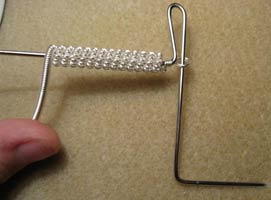
Viking knitting
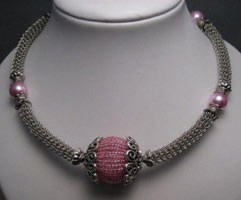
This tool lets you create beautiful braided tubes, similar to knitting. You can use them as a necklace, adding attractive end caps.
Thickness
The thickness of wire and metal strands is often indicated in gauge, and the higher the gauge, the thinner the wire. And of course, the thicker the wire, the better it holds its shape.
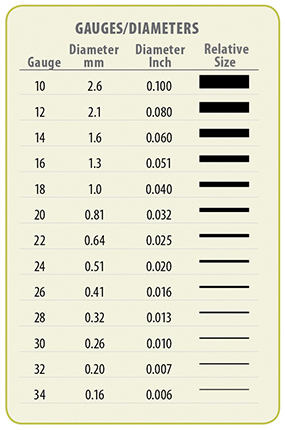
With 14 and 16 gauge wire, you can create beautifully shaped earrings or a ring, for example. With this thickness, you have to apply a lot of force to bend it, and then it holds its shape very well. 18 to 22 gauge is somewhere in between. This bends more easily, but still holds its shape well. However, you shouldn’t apply force to this thickness, as that will alter the shape.
The thinner wire, such as 24 and 26 gauge, can be twisted around the thicker wire in all sorts of shapes, perhaps even with beads strung into it. But to make it clear, we’ve created a summary below:
30 gauge (0,26 mm) en 28 gauge (0,32 mm)
30 gauge and 28 gauge are very thin, at 0.32 and 0.26 mm respectively, almost as thin as beading thread. This thickness is also more fragile and will break if you bend it multiple times in the same spot. However, this thickness is ideal for crochet, knitting, or Viking knitting or wire colling, as all these techniques allow you to twist the wire into round loops, which then stays securely in place.
26 gauge (0,41 mm)
The 26 gauge is slightly thicker at 0.41 mm, making it sturdier. You can still crochet and knit with it, but it will be a bit stiffer and is more likely to be combined with larger beads. This thickness is also good for wire wrapping, meaning you can encase cabochons, stones, or beads with wire.
From 24 gauge (0.51 mm)
At 24 gauge, you can no longer crochet or knit with it, as it’s too strong. From this thickness onwards, you can make spirals, headpins, ear hooks, or open jump rings. Or you can make spirals and wire-wrapped jewelry. Of course, the thicker the wire, the stronger it is. If you want to make something that will be subjected to a lot of tension, like a single jump ring for attaching a clasp or hanging a heavy bead, choose the thickest wire possible. When it comes to chainmaille, you have a lot of freedom of choice, depending on how you’re going to assemble it. Because the jump rings are fully connected, it distributes the tension.
22 (0,64 mm) and 20 gauge (0,81 mm)
The 20-gauge and 22-gauge sizes are the most common and can be used for many things. They hold the shape you bend them into well. Head pins are this thickness, so you have an idea. It’s the right thickness for stringing most beads. 20-gauge is still thick enough for making earrings or a ring. And 22-gauge is suitable for wire wrapping, for example.
18 (1 mm) and 16 gauge (1,3 mm)
18-gauge wire is 1.02 mm thick, and 16-gauge wire is 1.29 mm thick. These require more force to bend, so they’re ideal for sturdy items that really need to hold their shape, such as clasps, cuffs, or rings. For certain constructions, it’s recommended to twist the wire together for even greater strength, such as clasps that will bear a significant weight.
14 (1,6 mm) and 12 gauge (2,1 mm)
12 gauge is truly the thickest wire you can use for jewelry, specifically 12 gauge at 2.1 mm and 14 gauge at 1.6 mm. For this thickness, you’ll need good pliers to shape it into the desired shape, and it holds its shape well, even with a single wire. So, this thickness is definitely suitable for use as cuffs, clasps, rings, or as a base wire for wire wrapping.
Supplies
When you’re just starting out, pliers are the most important. Flat-nose pliers, cutting pliers, and round-nose pliers are particularly useful. You can see them in the photo below. But if you’re going to be doing a lot of wire work, it’s best to also get pliers with soft nylon jaws. These have soft nylon jaws, which prevent damage to your wire during processing.
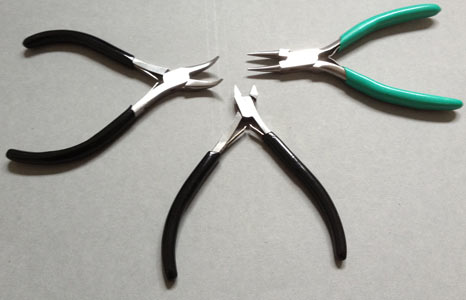
Besides these pliers, there are many other tools available, allowing you to create a wide variety of creations. Each tool has its own unique possibilities.
- Round-nose pliers and flat-nose pliers with soft nylon jaws. The soft nylon jaws allow you to bend the wire without damaging it.
- A masher tool and nylon hammer to flatten wire.
- A wire crinkler, with which you can create tight zigzag shapes in your wire.
- Use the cone mandrel to create a diabolo shape with wire, which you can use as an end cap.
- The wire rounder allows you to smooth and round the ends of cut wire. The inside of the head is rough, allowing you to sand the end smooth.
- A wire straightener that allows you to straighten slightly bent wire.
Colors
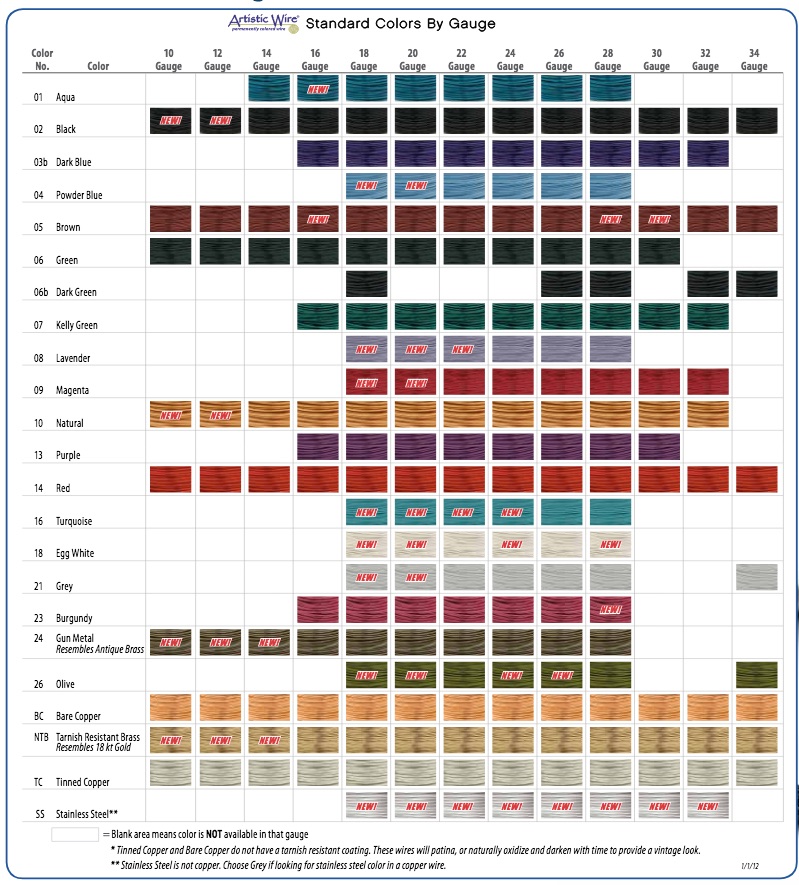
Artistic wire comes in many colors, some uncoated, but most with. Below is an overview showing how these colors are classified.