

There are many different types of thread for different purposes. One type is beading thread, which is primarily used with small beads and various threading techniques.
There are several types of beading thread, which can make choosing the right one difficult. Below, we’ve made an overview of their properties. This will help you better determine which thread is best for the creation you have in mind.
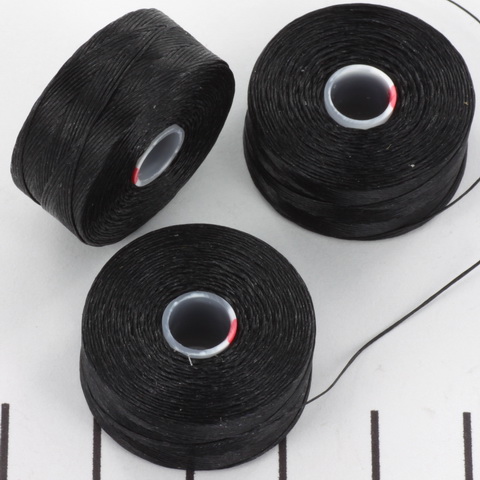
C-lon D / AA or Nymo B
This thread, made from C-lon or Nymo, is the most affordable option. It comes on small spools, making it easy to store compactly at home. It also comes in many different colors, so you can easily match it to your project.
It’s a strong thread, and because it consists of several strands twisted together, it won’t break easily. However, the thread’s construction does mean you could thread through it, for example, when rethreading a bead. Because the thread is partially embedded in the thread, it pulls apart and can fluff. Therefore, for projects where you’ll be threading through beads frequently, or where space is tight, it’s best not to choose this thread.
C-lon gauge D is approximately 0.11 mm and the most common. C-lon gauge AA is approximately 0.09 mm and more suitable for finer projects. Nymo B is approximately 0.2 mm thick.
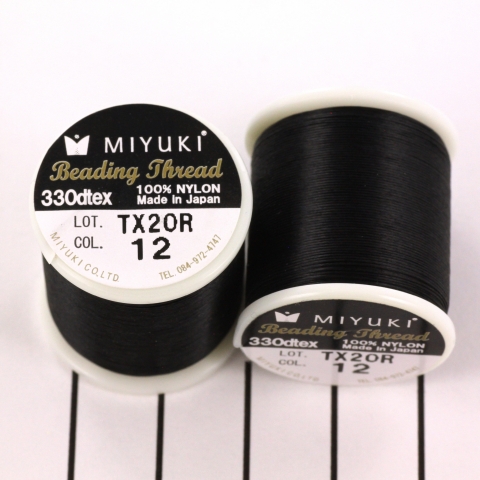
Miyuki / KO beading thread
Miyuki and KO’s beading threads are very similar. The bobbins and thread types are the same, but Miyuki has chosen slightly different colors than KO. This means you can choose from a wide variety of colors with this beading thread. You can also perfectly match it to your project, so the thread won’t stand out.
The bobbins are slightly larger than c-lon’s, measuring approximately 2 by 1.5 cm, but still nice and compact. The thread stays securely on the spool, so it doesn’t suddenly come off if you cut a piece.
This thread is smoother than, for example, Nymo thread. In our experience, it hardly frays and you don’t thread through it easily. A bobbin contains approximately 50 meters of thread, and the thread is 0.2 mm thick.
In addition to the small bobbins, Miyuki also offers several basic colors on 500-meter bobbins. This is a larger upfront investment, but it will last you a very long time. And if you convert it to the price per meter, it’s definitely cheaper.
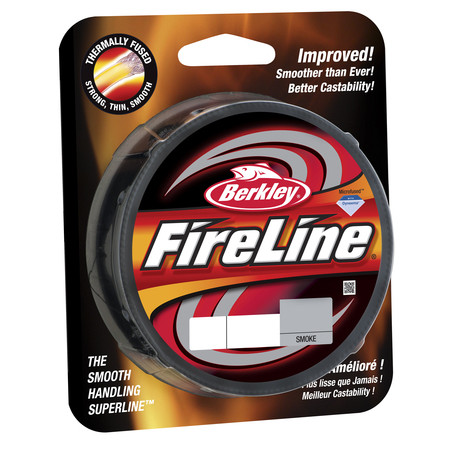
Fireline
Fireline was originally designed as fishing line, but because it’s so strong and flexible, it’s also very suitable for jewelry making. Fireline is available in crystal (white) and smoke (gray). Crystal is best for lighter colors and gray for darker colors, especially if you don’t want the wire to be very visible.
The thinnest option is 0.08 mm, which is ideal for small and very precise projects. This does, of course, make it somewhat more fragile. Nevertheless, Fireline is always very reliable because it’s made of nylon. The thickest option is 0.2 mm, which is extra strong, perfect for 3D objects or framing projects, for example. Keep in mind, however, that this makes it more difficult to thread the same bead multiple times due to its thickness. The most commonly used thicknesses are 0.12 mm and 0.15 mm. Some needles even have a small eye for this Fireline, but a tip is to squeeze the Fireline flat with pliers or your fingernails to make it fit just right.
Fireline is more expensive than other beading threads, but many beaders specifically choose it and wouldn’t want to use anything else. Your bracelets or necklaces will also be stronger and more compact with Fireline, because the thread is a bit stickier, and the thread is very durable and doesn’t break easily. That’s why Fireline is especially useful for 3D objects or something you want to frame. You just have to be careful with Swarovski bicones, as the inside of these beads can unfortunately cut through the thread.
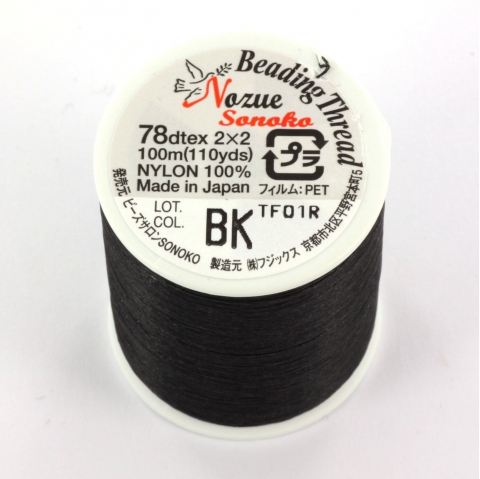
Sonoko elastic beading thread
Sonoko’s wire is also 0.2 mm thick and slightly elastic. It’s not as stretchy as regular elastic (which would make it too fragile at this thickness), but it has enough stretch that it’s perfect for making things like bangles strung with small beads. This stretch keeps the bangle nice and taut, but with just enough slack to roll it over your hand.
Sonoko thread also makes your work more compact, because its slight stretch allows you to thread everything more tightly. While the thread is a bit more fragile than the ones mentioned above, purely due to its stretch, it certainly won’t break easily.
The spools are 100 meters long and come in four basic colors: black, white, gray, and natural.
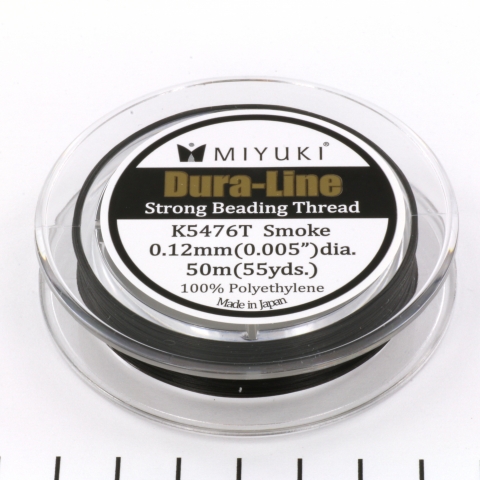
Miyuki Dura-Line
This Dura-line beading thread is recommended for high-tension beading projects. It’s a thin, yet very strong, flexible thread that works very well with beading patterns requiring higher tension. It’s still thin enough to work with small beads, but it can withstand a lot of force. It doesn’t stretch, threads easily through a size 12 needle and is easy to make a knot when finished.
A regular spool contains 20 meters and the XL spool contains 50 meters and it is available in thicknesses of 0.12 and 0.15 mm and can be purchased in white and black.
Choosing colors
When you’re just starting out, you probably don’t want to order a ton of colors right away. You’d rather have a spool that offers a wide variety of possibilities. In that case, we recommend choosing a medium gray if you primarily use dark colors. Or, for example, a natural color if you use a wide variety of colors. Or a silver-gray if you primarily use light colors. While white and black are neutral, they often create a greater contrast with the beads than, say, gray or natural, so you’ll see more of that in your work.
These are the most commonly used types of beading thread, each with its own advantages and disadvantages. Now, there’s no single type of thread that’s perfect for everyone, as this certainly depends on personal preference. So, choosing your thread is simply a matter of personal preference.