
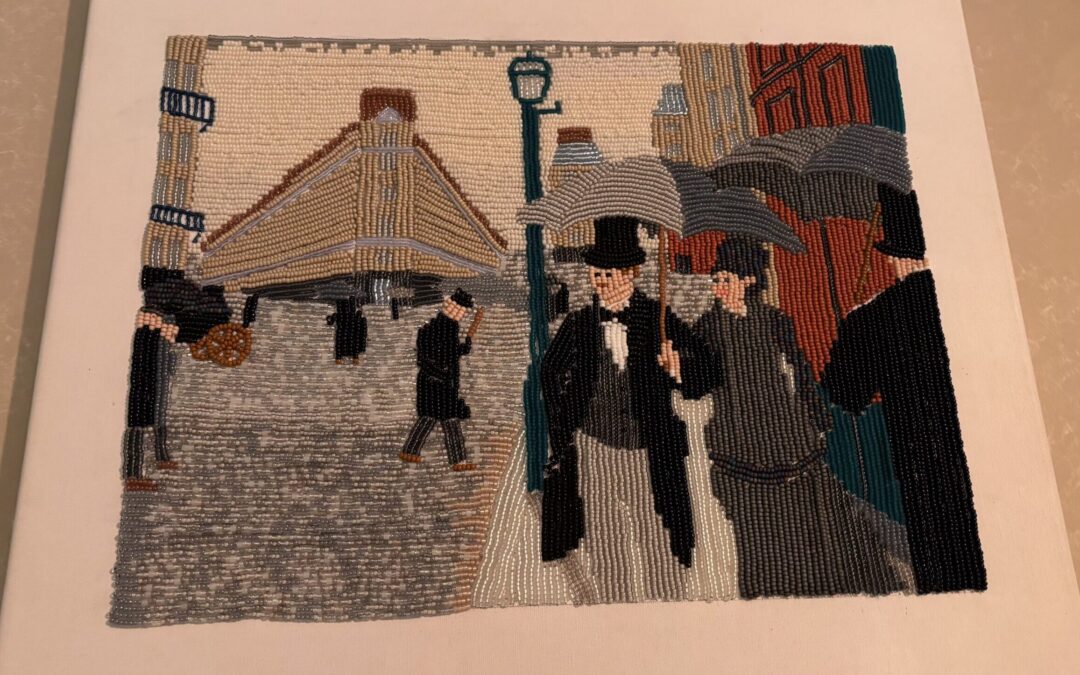
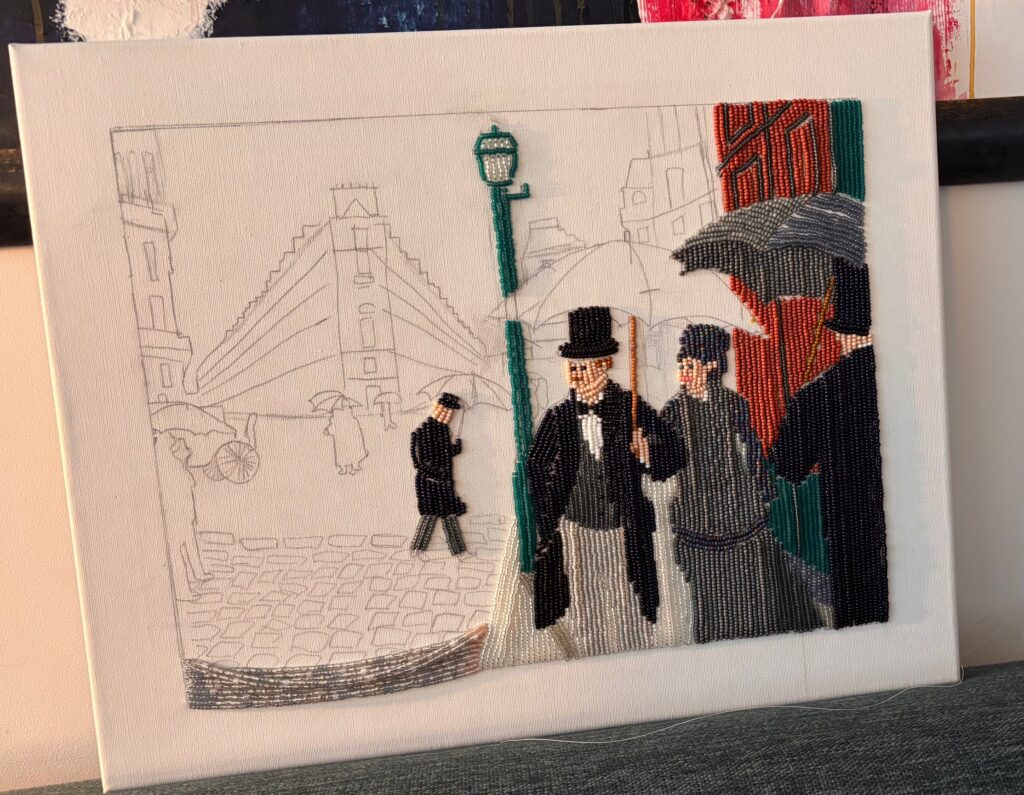
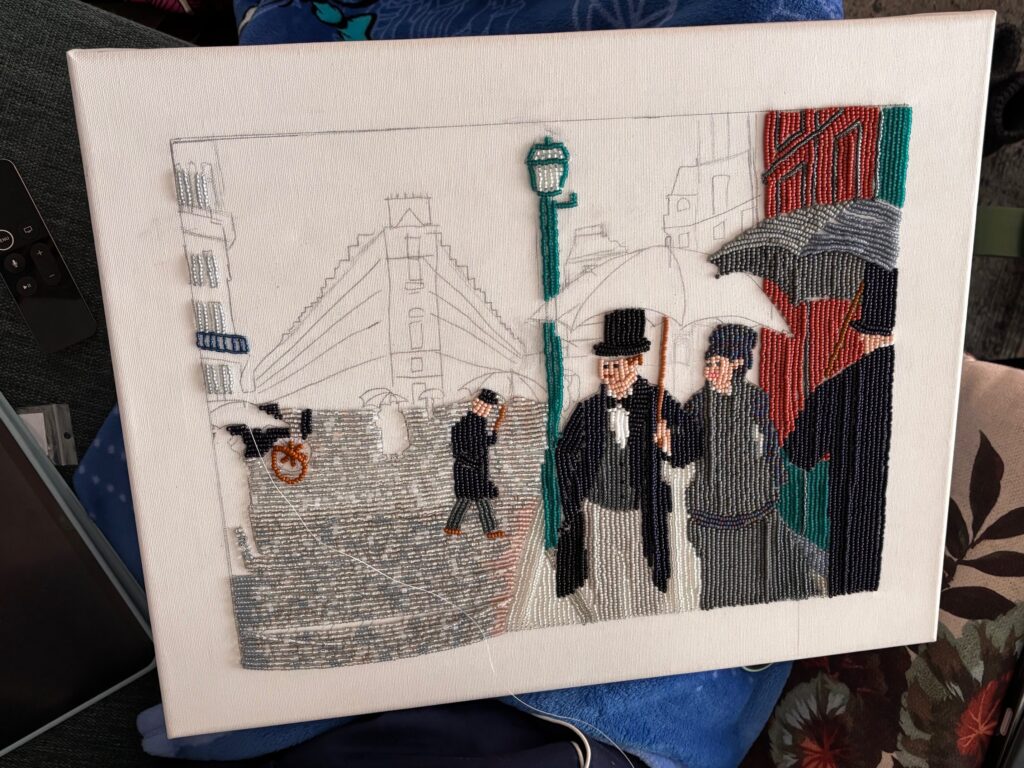
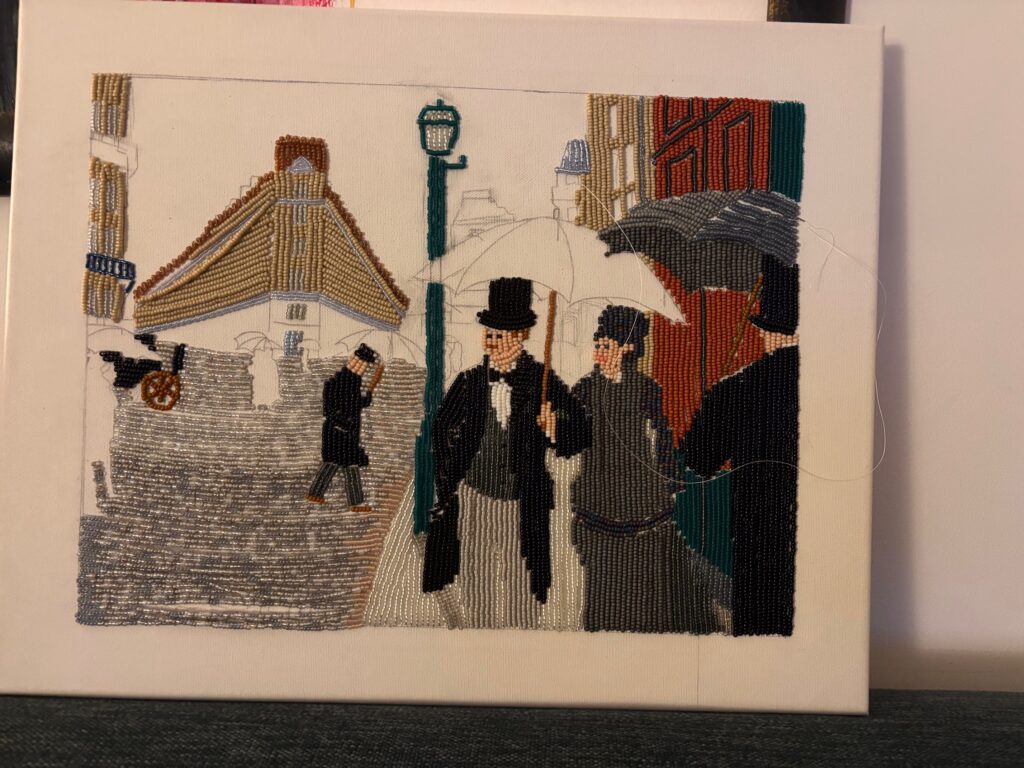
We received an email from Karin with the beautifully school project “Art with a Different Touch” by her daughter Julia (15 years old, College Atheneum Hageveld in Haarlem, the Netherlands). Julia used the painting “Paris Street, Rainy Day” as inspiration and transformed it into a Miyuki bead version. We think it’s incredibly beautiful and creative, and we’re happy to share these kinds of stunning artworks with you!
Thanks, Julia, for the inspiration! We’d be happy to put in a good word for you.
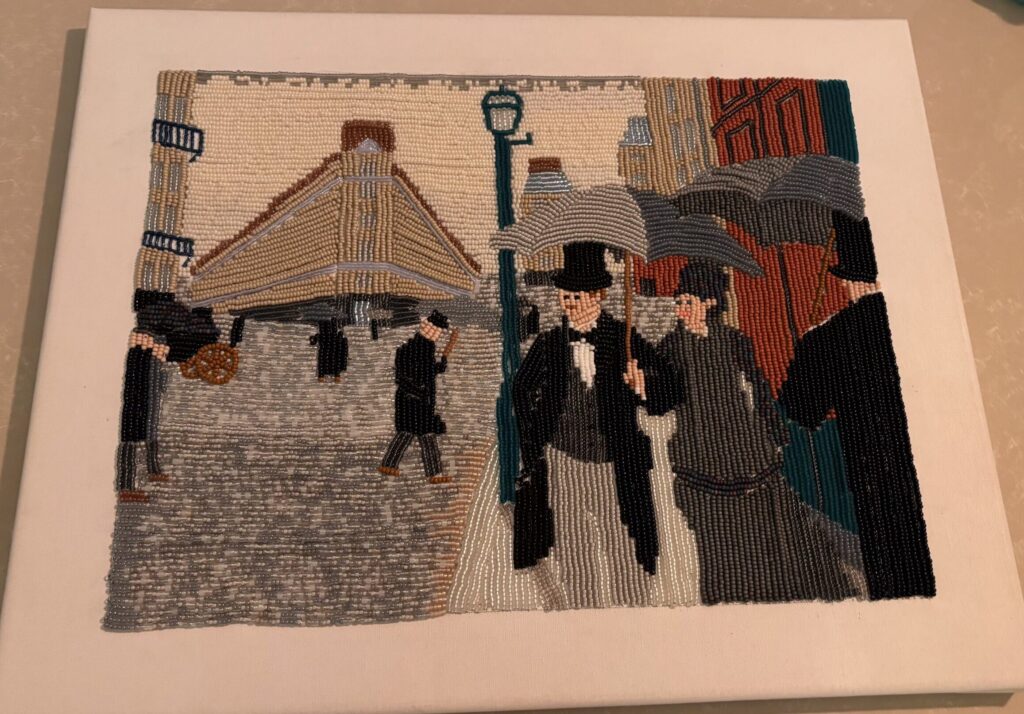
How it’s made:
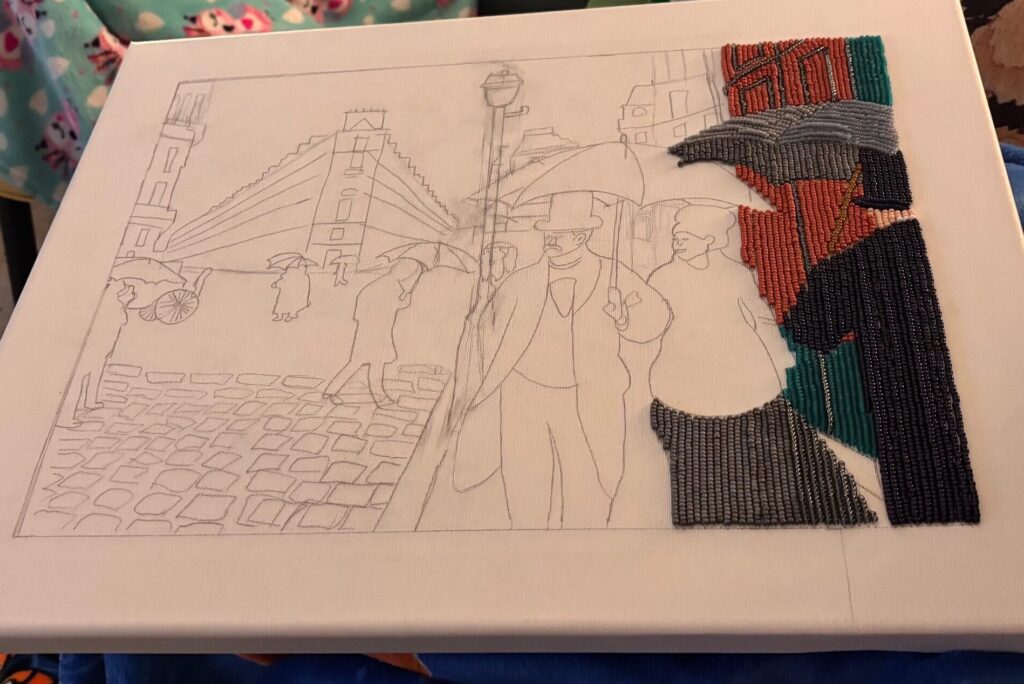
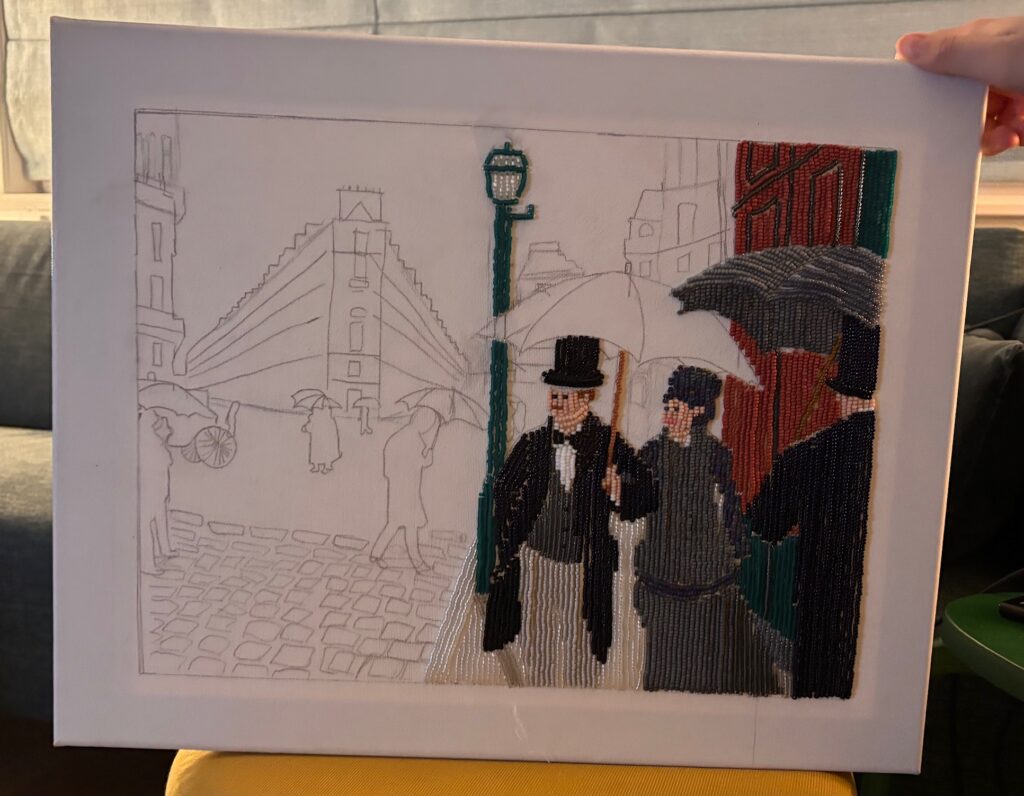
Julia first printed a scale model of the painting and then traced it onto the 40×50 cm canvas with carbon paper. She used Miyuki 8/0 seed beads, which were strung with wildfire thread and then embroidered onto the canvas.
Information about the original painting:
Paris street, rainy day by Gustave Caillebotte
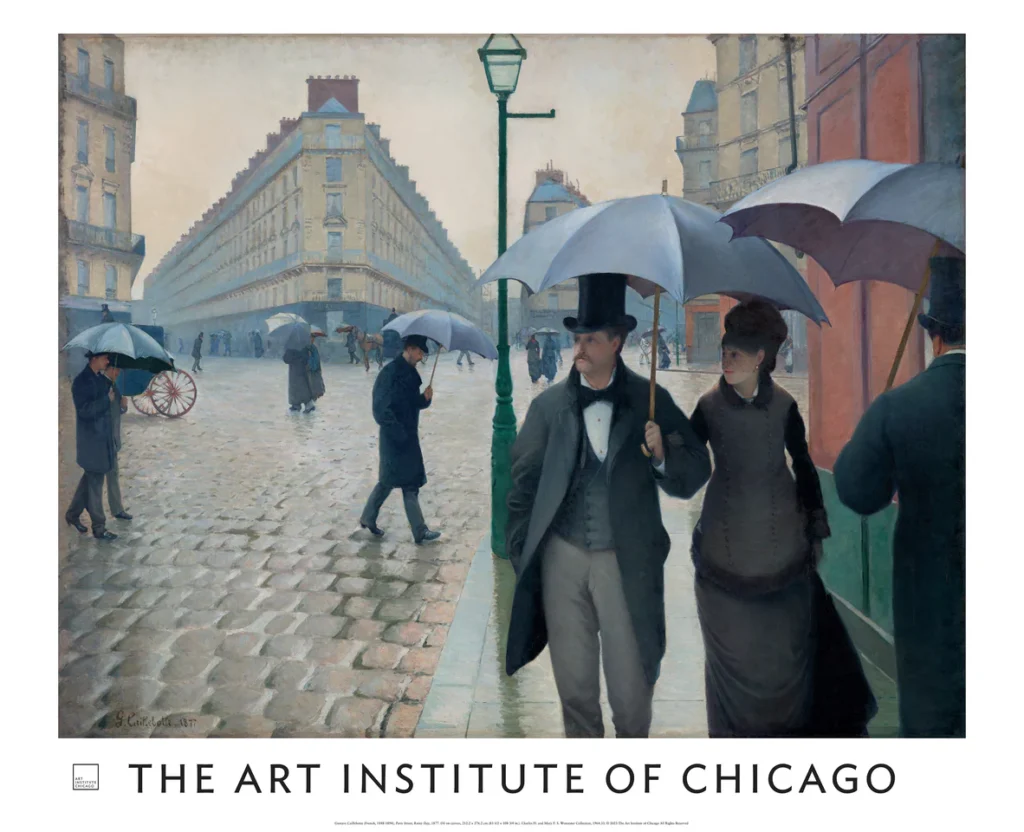
This complex intersection, just minutes from the Saint-Lazare train station, represents in microcosm the changing urban landscape of late nineteenth-century Paris. Gustave Caillebotte grew up near this district when it was a relatively unsettled hillside with narrow, crooked streets. As part of a new city plan designed by Baron Georges-Eugène Haussmann, these streets were rebuilt and their buildings razed during the artist’s lifetime. In this monumental urban rendering, measuring nearly 2×3 meters and considered the artist’s masterpiece, Caillebotte strikingly captured a vast, stark modernity, complete with life-size figures strolling in the foreground, wearing the latest fashions. The painting’s highly crafted surface, rigorous perspective, and grand scale appealed to a Parisian audience accustomed to the academic aesthetic of the official Salon. On the other hand, its asymmetrical composition, unusually cropped forms, rain-washed mood, and frankly contemporary subject matter stimulated a more radical sensibility. For these reasons, the painting dominated the celebrated Impressionist exhibition of 1877, largely organized by the artist himself. In many ways, Caillebotte’s frozen poetry of the Parisian bourgeoisie prefigures Georges Seurat’s luminous Sunday on La Grande Jatte – 1884, painted less than a decade later.