
There are many different types of clasps for jewelry making. In this blog post, we’ll give you an overview, including their uses. And, of course, tips to make your choice or jewelry making easier.
Magnetic locks
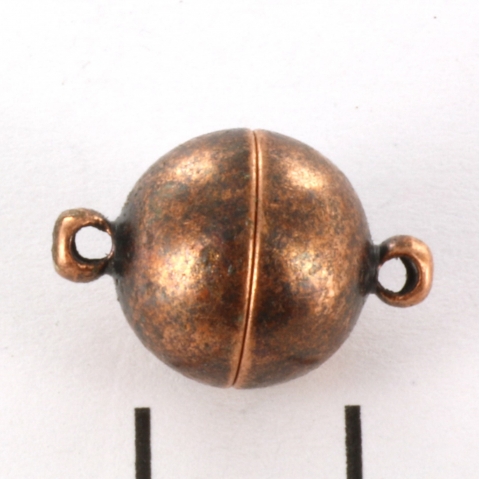
There are different types of these, of which the round balls are probably the most well-known. They are metal balls with a magnet inside and an eyelet on each side to attach the necklace or bracelet. They are very easy to put on and take off a necklace, especially convenient for older people whose hands are less dexterous. With bracelets, however, it’s always important to be careful not to get them caught on something, as you could lose them without realizing it.
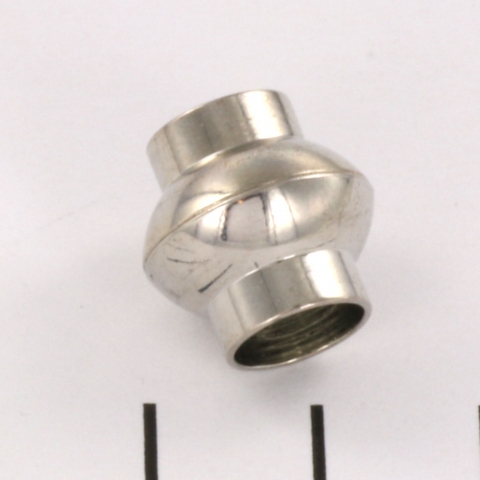
Another option is magnetic clasps with a large opening on the sides, allowing you to glue round leather or cord. It’s important to pay close attention to the internal diameter of these clasps, which should match the thickness of your cord. Often, the clasp can be 1 mm narrower, as many cords can be crimped a little flatter, allowing them to still fit.
It is important that magnetic locks are not worn by people with a pacemaker.
Metal end caps
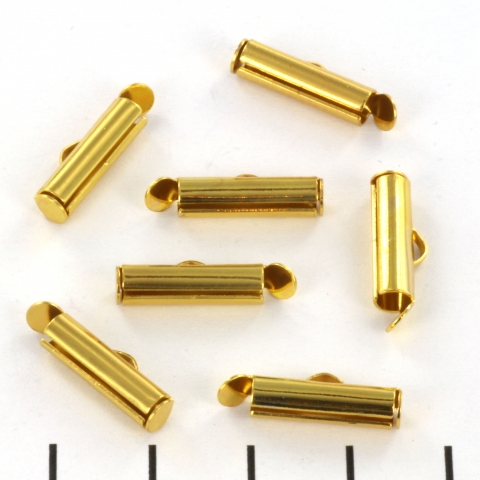
These are end caps that you slide lengthwise over the last row of beads. They are especially suitable for loom bracelets, because the beads are strung side by side. These clasps fit seed beads up to size 8/0.
They can be ordered separately, or together with a clasp and extension chain. They also come in different widths, which you can adjust to your bracelet.
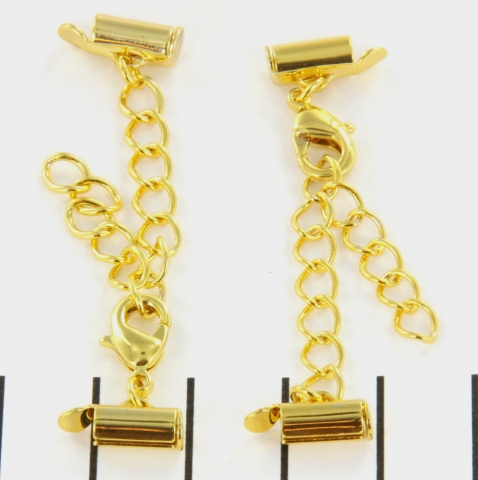

Always check the width of your bracelet when you start. This way, you can adjust it if the width turns out slightly different. This can depend on how tightly you string, the type of thread you use, and even the color of the beads.
Slide end tubes
The slide end tubes are from Miyuki and fit perfectly over the Delica 11/0 beads. They’re a perfect finishing touch to your loom bracelets. Just like the metal clips, you slide these over the last row of beads. Once they’re in place, push the sides down to secure everything in place.
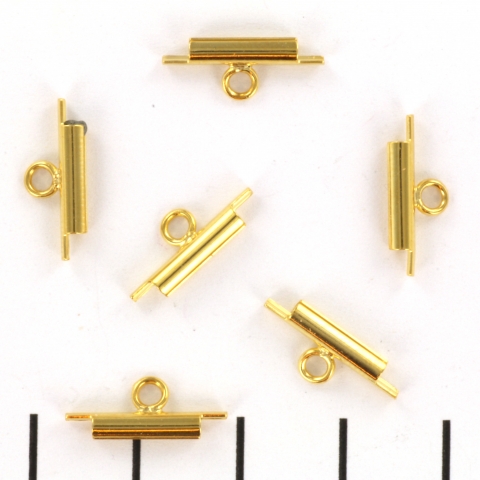
You can also use it with a peyote bracelet by adding a row at the end with a ladder stitch, so you can attach it over it. Below you’ll see how.
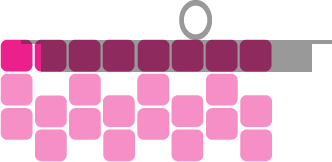
You can attach a lock to the eye of the slide end tube and a ring or extension chain to the other side.
Insert lock
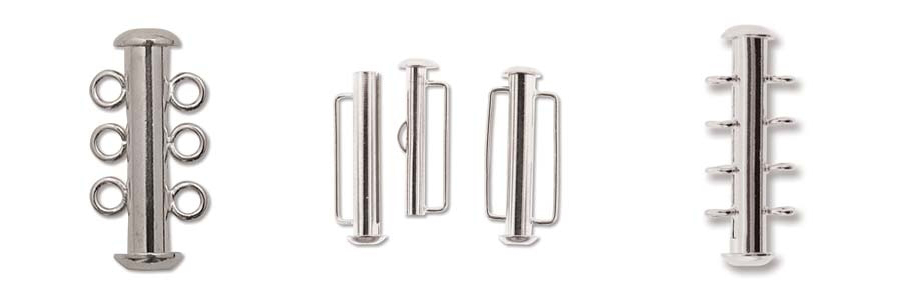
These locks consist of two halves that fit together precisely lengthwise. They have eyelets or a small bar on the sides to which you can attach the wires. The inside is often magnetic, so the two sides stay securely in place. The eyelets can be attached in different ways, namely horizontally and vertically.
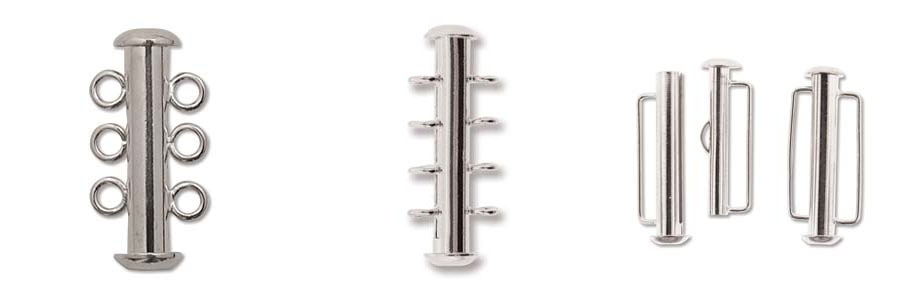
These clasps are especially useful for bracelets that are wider or have multiple strands. This allows you to neatly attach the clasp across the entire width, while it lies flat.
Carabine clasp
Carabine clasps are also called lobster clasps, and the most common sizes are 10 and 12 mm. The bottom has an eyelet, allowing you to attach it to one side and then attach the top to an eyelet on the opposite side. This eyelet is often not included with the clasp, so you can choose open jump rings (but sturdy ones!) or split rings.
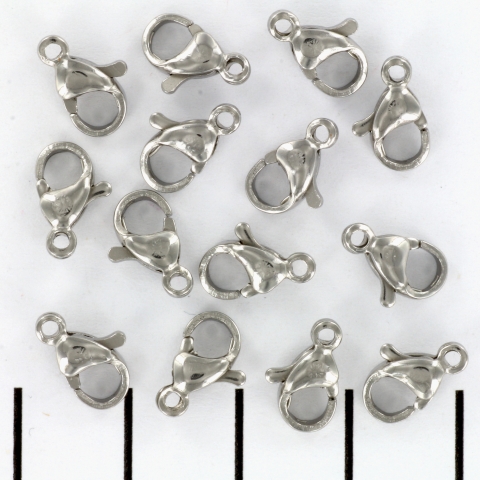
What’s important with these locks is that you check whether the eyelet is large enough for the open ring you’ll be attaching it to. This can vary, and it won’t fit if, for example, the eyelet is 0.8 mm thick while your open ring is 1 mm.
Toggle clasp
A toggle clasp consists of two parts: a bar and a round shape. The idea is that you thread the bar through the eye, and when it straightens out, it catches on the round shape. You thread it through lengthwise, and once the bar is straightened out, it won’t fit through anymore.
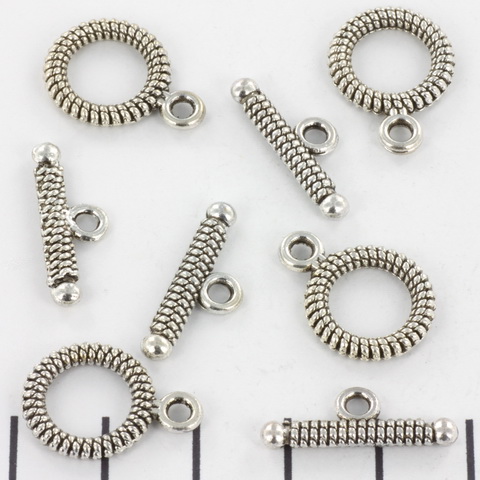
You often can’t swap one half of a clasp for the other, because the length of the bar must match the size of the circle. And don’t use beads that are too large on the ends, or the clasp won’t close properly. The beads on the ends also end up in the circle when you put it on or take it off, so they should be smaller.
Knot
The knot is used, for example, in chan luu bracelets or kumihimo bracelets. While it’s not actually a clasp, you can create a loop on the other side, allowing you to pull it over the knot, securing it.
Twist clasp
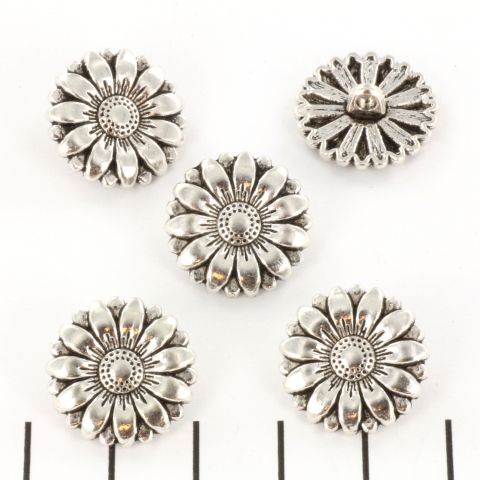
A twist clasp can consist of two halves that you twist together. Besides being magnetic, they also have pins and holes that slot into place when the bracelet is closed. CreaDream offers these clasps, which you can glue onto leather, in various sizes.
Hook clasp
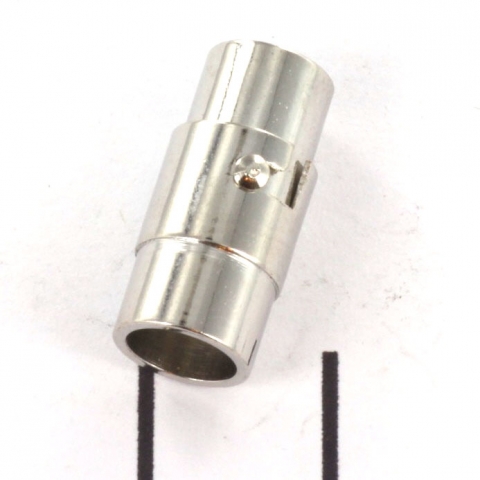
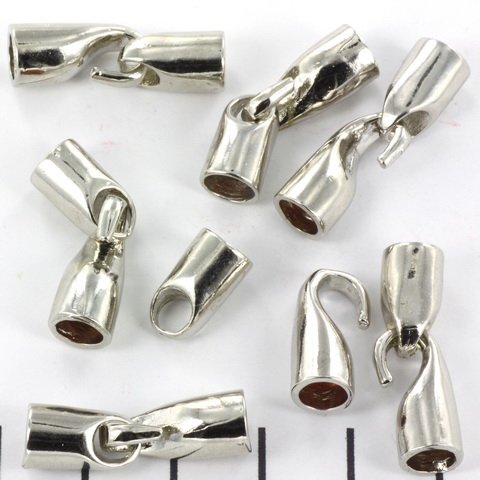
The hook clasp is literally a hook that can be hooked into the other. You can glue a cord that fits into the loop. It’s often a bit thicker, as the cord can be squeezed a bit. These clasps are a bit heavier, so they’re more likely to slide down on a bracelet. This doesn’t happen as easily with a necklace, which is fine.
Press stud
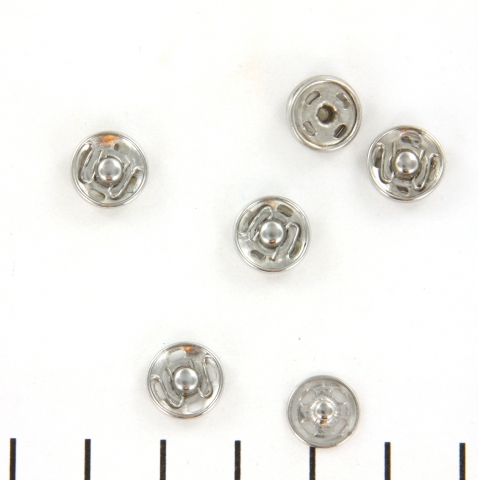
With press studs, you can add an invisible closure to your bracelet. You attach one half to one side and the other to the other, then simply snap it shut. This is especially useful for flat bracelets, which you can then attach on top of each other. This creates a seamless flow, perhaps even matching the bead pattern.
Cymbal clasps
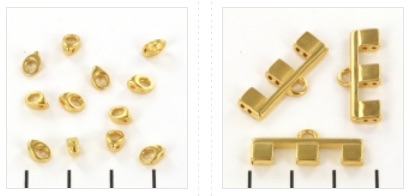
These clasps are specially designed for specific bead shapes, such as Tila beads or Superduo beads. The shape of the clasp perfectly matches the shape of the bead, creating a beautiful transition.
This way, you can beautifully finish your strung bracelet by threading it through the clasp. We recommend threading it through several times for extra strength.
Stop beads
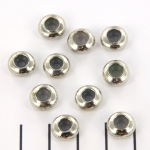
This stopper bead has a soft rubber interior and is primarily used as a sliding bead for necklaces or bracelets. The stopper bead fits snugly around the cord, making it a great alternative to a sliding knot or clasp, for example. The rubber interior keeps everything securely in place.
Do you have any tips for finishing jewelry beautifully? We’d love to hear them!