Everybody can do it!
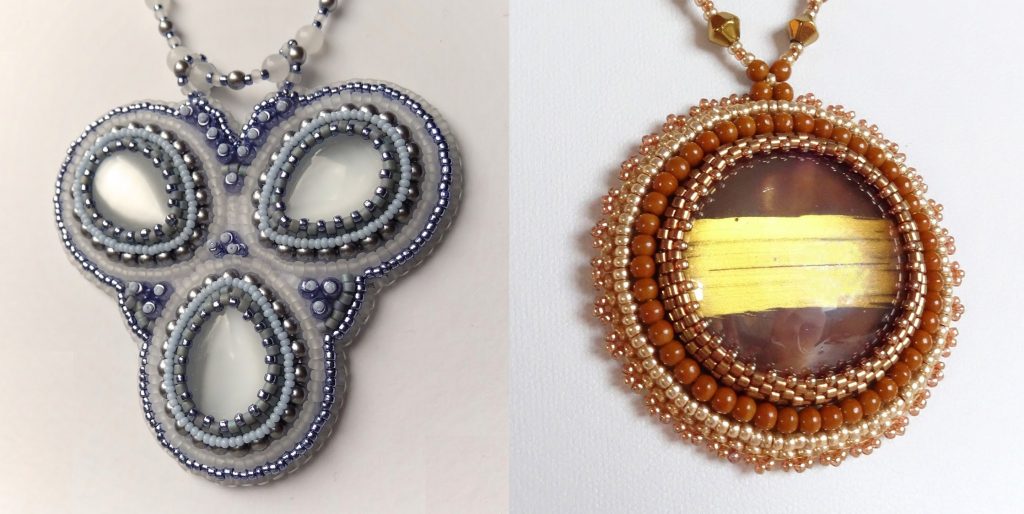
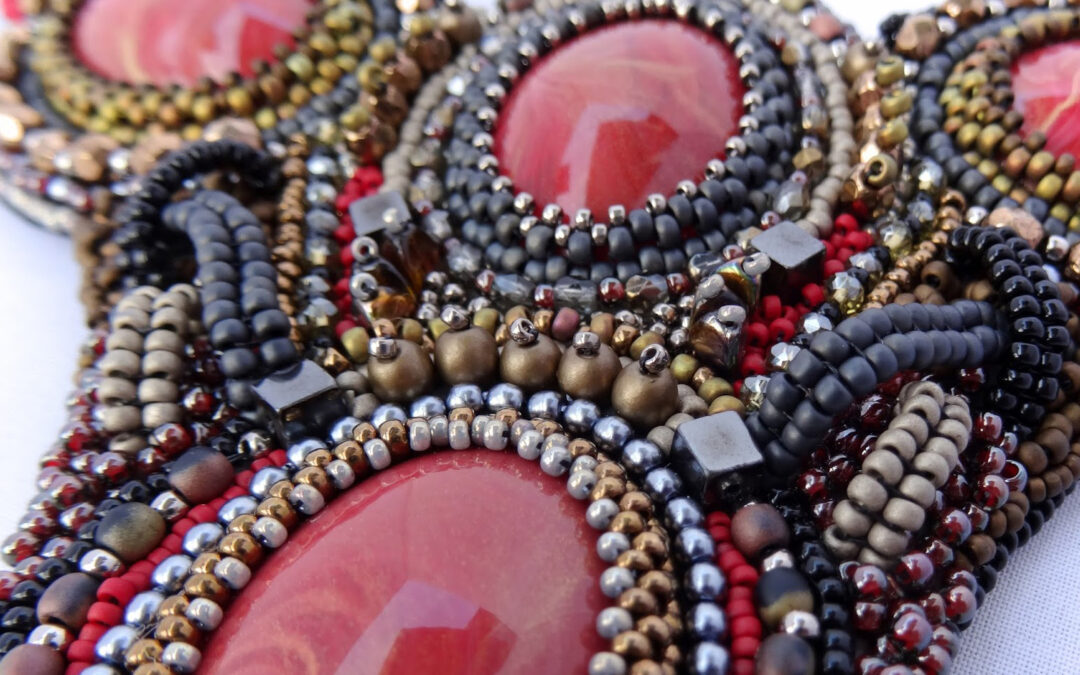
Bead embroidery is one of our favorites! The great thing is that it looks difficult but once you try it, it isn’t so bad!
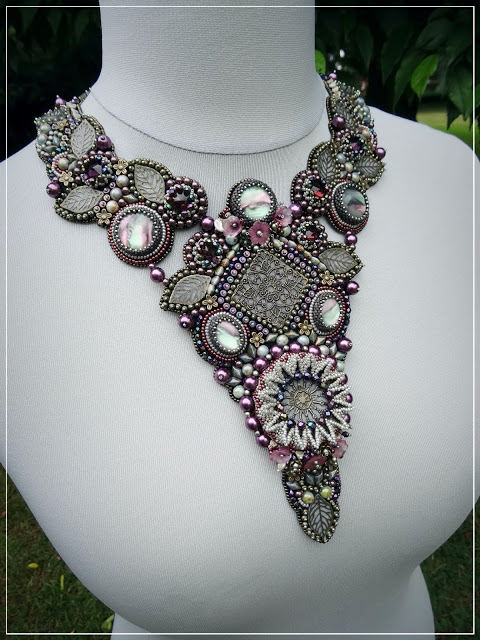
Below is an example of a necklace, but there are so many possibilities!
Youtube video
Bead embroidery is a beautiful technique with many possibilities. You have the freedom to place the beads wherever you like, so you can truly create your own style. Many creations involve encasing cabochons, which are often the focal point of the work. In the video down below she’ll show and explain you how to encase a cabochon. This is the easiest way to get started and get the hang of it.
The following video doesn’t use a felt base, but it does clearly show how to wrap a cabochon with beads:
The most important tips:
It’s important not to pull the thread too tight. This will cause the fabric to bunch up and look messy. Always thread slowly, and as soon as the thread stops under the fabric, it’s done and you can continue threading. Don’t pull it too tight.
And if there’s not enough space for 4 beads side by side, but too much for 3, then still choose 3 beads. It’s better to choose slightly fewer beads, as this will look better. You’ll be adding more beads around them, which will often result in a neater look. And even if you still have some space between them, it will hardly be noticeable later. While you’re working, it’s hard to believe, but that’s because you’re looking very closely now, and you’ll soon see the whole thing.
When choosing the foundation (or other base fabric, such as felt or leather), it’s best to choose a color that matches the colors of your beads. And if you have the choice, choose a darker color instead of a lighter one. The latter will stand out more, and the darker one will make the beads stand out more.
Needed supplies:
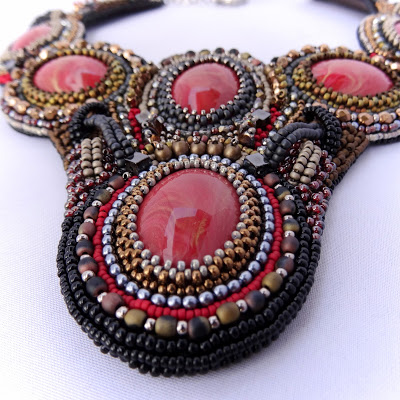
Based on a cabochon you’re going to wrap, we’ll list what you’ll need below. You can, of course, use all sorts of beads alongside it to further enhance your jewelry, but you’ll figure this out as you progress.
To make a piece of jewelry you’ll need the following basic supplies:
- Beading foundation / stiff stuff
- Delica beads 11/0
- Seed beads 11/0 and 15/0
- Cabochons
- Beading thread
- Needle
- Sciccors
- Ultrasuede
Beading foundation or stiff stuff. This is a firm type of felt that doesn’t stretch and allows you to string it endlessly. If you string it repeatedly in the same spot or very close together, this isn’t a problem; the thread stays securely in place. You can also use leather as a base; it’s also quite sturdy, but threading through it is much more difficult.
The type of beads you use can vary widely, but for encasing a cabochon, delica 11/0 and seed beads 11/0 and 15/0 are most commonly used. While blending colors is beautiful, a contrasting color creates a surprising effect.
Cabochons. It’s easiest to start with a round cabochon that isn’t very high. The higher it is, the more rows you’ll need to string. For each row, you’ll need to estimate the bead size you need. If a row starts to get a bit tighter, choose the next row a size smaller. This will ensure that the circles become smaller and the cabochon is wrapped.
Beading thread. You can use any thin thread. An advantage of Miyuki thread is that they’re available in many colors, so they’ll perfectly match your chosen bead colors. They’re also somewhat more flexible, which works better with the fabric, compared to things like fireline. However, this is a matter of personal preference; if you always work exclusively with fireline, it will certainly work well with bead embroidery, provided you choose a thread that’s not too thick, no more than 0.15 mm.
Needles. Depending on the type of beads you’re using, you can use any needle. A short needle is best because you have to thread back up through the fabric, and this is easier with a shorter needle. You can then better determine your position. A sharp needle will also thread through the fabric more easily. We prefer the short #11 Tulip needle.
Ultrasuede. This is a synthetic fabric that is very strong and often used as a backing. It’s very soft, comfortable against the skin, and very durable. If you don’t thread it in the right spot right away, it won’t be immediately visible. Only when you rethread it with a thicker needle and in the same spot will it become visible.