
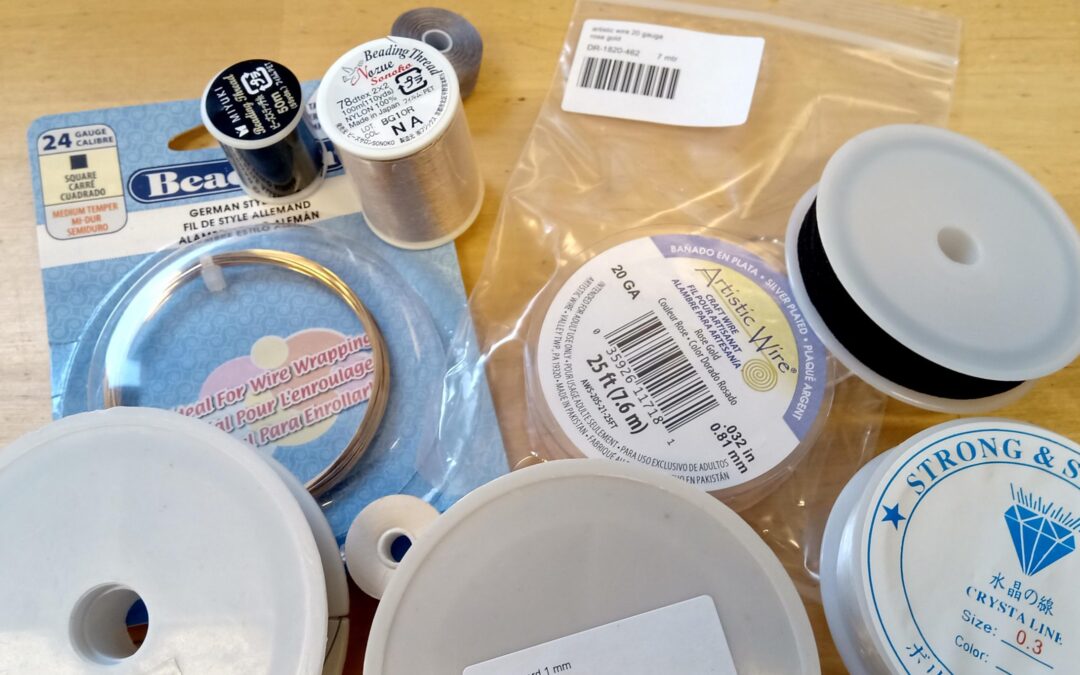
Artistic wire
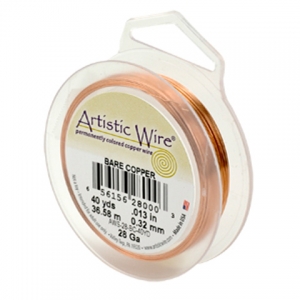
Artistic Wire (or metal wire) – this is flexible metal wire that can be bent into a specific shape. The thickness is expressed in gauge, and the higher the gauge, the thinner the wire. You can use very thick wire to make a cuff bracelet, for example, that will stay in the shape you bend it into. Or you can wrap beads, like wire wrapping. You can also make beautiful beaded flowers or trees with it. It’s available in many colors.
Metal wire
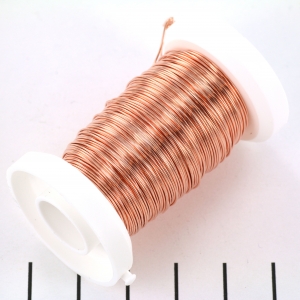
Metal wire – This is the same as the description for artistic wire above, but from the other good brand, Knorr Prandell. This wire is primarily available in basic colors and is also measured in millimeters.
Steel wire
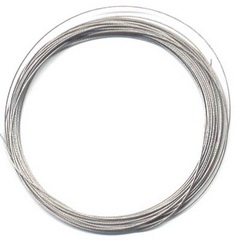
Steel wire – This is a very strong, flexible steel wire suitable for making single necklaces or bracelets. The clasps are attached using crimp beads combined with concealers. It drapes beautifully and smoothly, but it’s important to ensure there are no kinks, as these will always be visible.
Beading thread
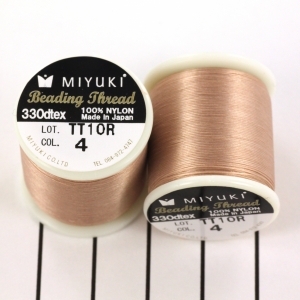
Beading thread – This is a thin thread intended for special beadwork, particularly with smaller beads. The thickness is approximately 0.1 to a maximum of 0.3 mm, and you can choose between synthetic and fabric thread, depending on what you want to make. The most popular are Ko and Miyuki thread. The choice here can also be very personal.
Beading cord
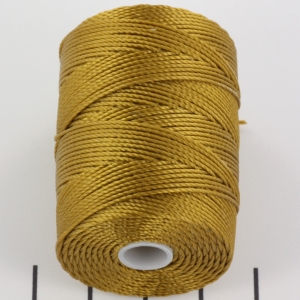
Beading cord – This is a beautiful, smooth cord, primarily intended for macramé or kumihimo. It has a lovely gloss, is very durable, and you can finish it by briefly holding the end in a flame, melting it and ensuring it stays securely in place. The most popular thickness is 0.5 mm, followed by 0.9 mm, which is slightly thicker. For beaded crochet or micro-macramé, the thinner 0.3 or 0.4 mm cords are ideal.
Waxed cord
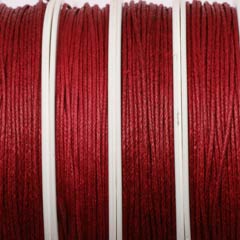
Waxed cord – this is a somewhat stiffer cord, usually 1 mm thick. You can use it to make beautiful chan luu bracelets, as well as knotted or braided bracelets. It’s made of cotton and less shiny than other threads. And because it’s cotton, you can’t burn it shut with a flame.
Leather
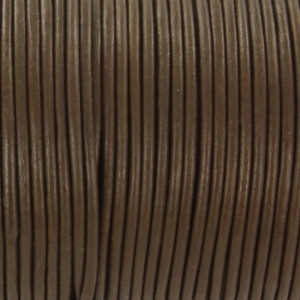
Leather – you can use this to make beautiful wrap bracelets or chan luu bracelets. The most popular is the smooth 1mm leather, available in many colors. It comes in smooth or matte finishes, depending on the desired look. For the clasp, you can use glue-in clasps or attach a clasp to a cord clamp or end cap.
Spiral wire / Memory wire
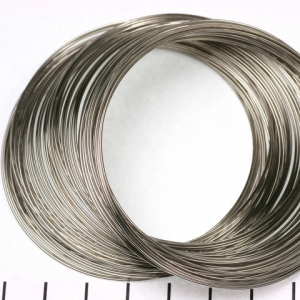
Spiral wire or memory wire – This is a round metal wire that holds its shape very well and is the right size for your wrist. You can string small beads onto it, perhaps with spacers or bead caps, after which you twist an eyelet into each end with round-nose pliers.
Nylon thread
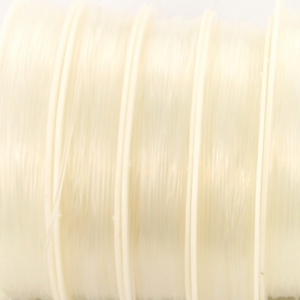
Nylon thread – this is a strong, yet very flexible synthetic thread for making bracelets or necklaces. It’s available in various thicknesses, with the most common being 0.3, 0.5, 0.8, and 1.0, depending on the beads you want to use. If you’re using heavy beads, choose a thicker thread so it can hold the weight well.
Nylon elastic
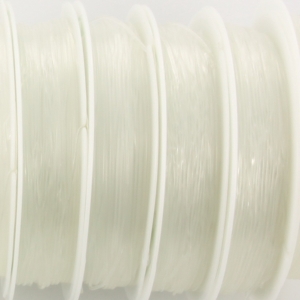
Nylon elastic – very popular for use in bracelets. Its advantage is that it’s very easy to thread, as you don’t need a needle, and once the beads are on, all you have to do is tie a knot. An important tip to prevent stretching during wear is to give the elastic a good stretch before threading the beads on.
Nylon cord
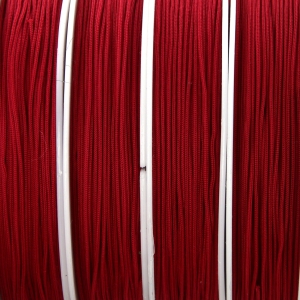
Nylon cord – A beautiful, shiny cord, made from a variety of cords, perfect for making cute summer bracelets. 0.8 gauge matches perferctly the hole size of a delica 11/0. You can also melt the ends of this cord by briefly holding it in a flame.
Rubber cord
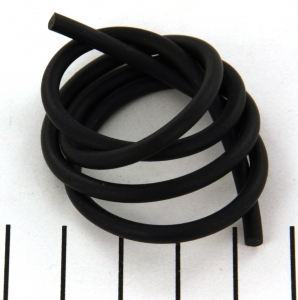
Rubber cord – This is a hollow rubber cord, perfect for filling strung tubes, such as peytwist or tubular herringbone, but also great for adding to memory wire bracelets. It creates a lovely effect.
Satin cord
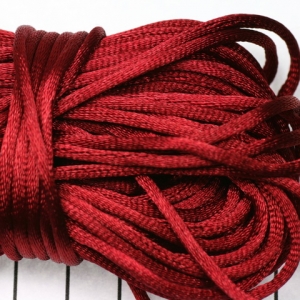
Satin cord – This is a light and soft cord that you can use for knotting, but can also be used as the base for a beaded necklace. Satin cord is a bit thicker at 3.5 mm, so you’ll need to take this into account when choosing beads.
Shamballa cord
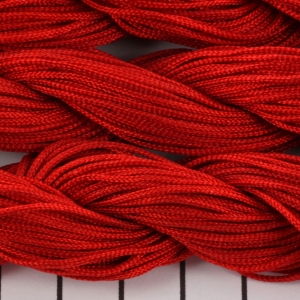
Shamballa – This is a strong, flexible cord that makes beautiful knots. Once finished, you can secure the ends by melting them with a flame. It has a beautiful gloss and can also be used for a single beaded bracelet, for example. It’s 1mm thick, so choose beads with a minimum 1.2mm hole.
Soutache cord
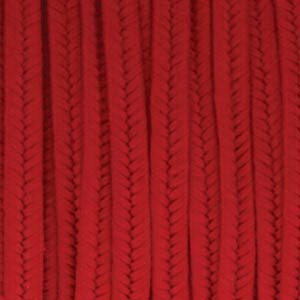
Soutache – This is a braided cord shaped like a figure eight, with a slit in the middle on each end. It’s primarily used in bead embroidery, where you string beads between them. It’s important to keep your thread tension very low, otherwise the fabric will be skewed, and to thread precisely into the slit so the thread remains invisible.