
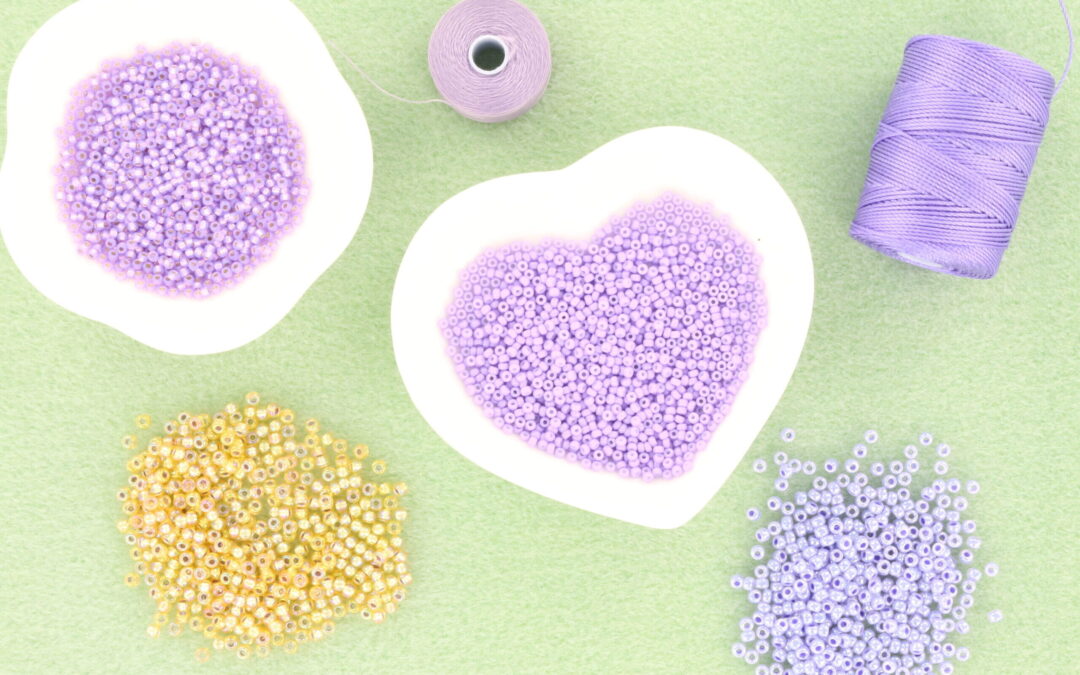
If you’re new to the world of Miyuki beads, it can sometimes be difficult to get a clear overview of exactly what you need for your creation. Miyuki is a brand known for the high quality of its beads, including rocailles and delicas, which are produced in Japan. On this page, you’ll find detailed information to help you get started with beads. Whether you’re unsure about which size or material is best for your project, we hope that after reading this page, you’ll be fully informed!
Different Shapes of Miyuki Beads
Miyuki Delica
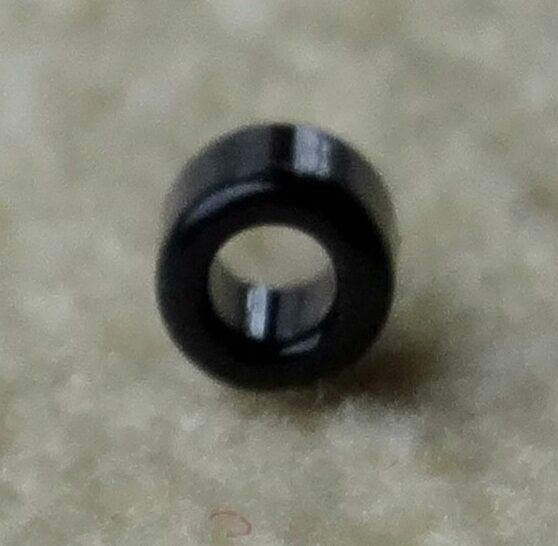
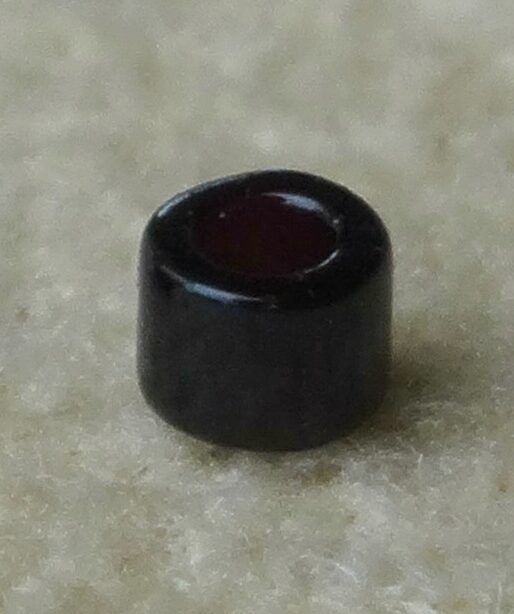
A Delica is a bead in the shape of a cylinder. The thickness of the bead is uniform across its entire width. Size 11/0 is the most common size, with a height of 1.6 mm and a width of 1.3 mm. The hole across the bead is 0.8 mm. With a Delica, you can easily thread through the bead multiple times, even though it is a small bead.
Different sizes from large to small:
(As you can see, the smaller the number, the larger the bead size)
Delica 8/0
- Hole: 1.2 mm
- Length: 3 mm
- Width: 2.8 mm
- Thickness: 2.8 mm
Delica 11/0 (most commonly used size)
- Hole: 0.8 mm
- Length: 1.6 mm
- Width: 1.3 mm
- Thickness: 1.3 mm
Delica 15/0
- Hole: 0.65 mm
- Length: 1.3 mm
- Width: 1.0 mm
- Thickness: 1.0 mm
Suitable Techniques for Miyuki Delica Beads
Peyote Stitch (even & odd)
- Suitable for bracelets, earrings, rings, charms, and 3D shapes.
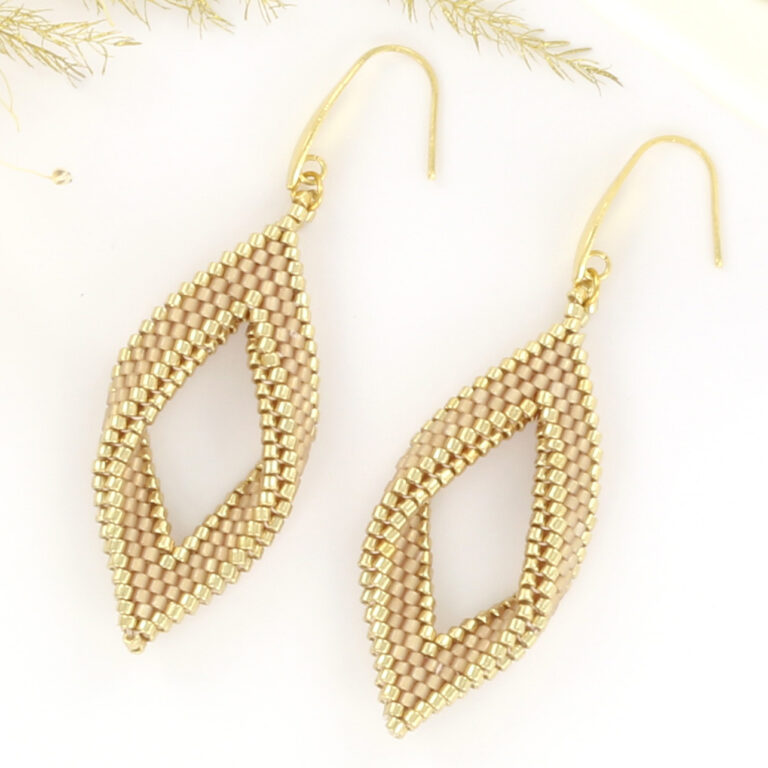
Brick Stitch
- Often used for earrings, small figures (flowers, animals, symbols), and fringe designs.
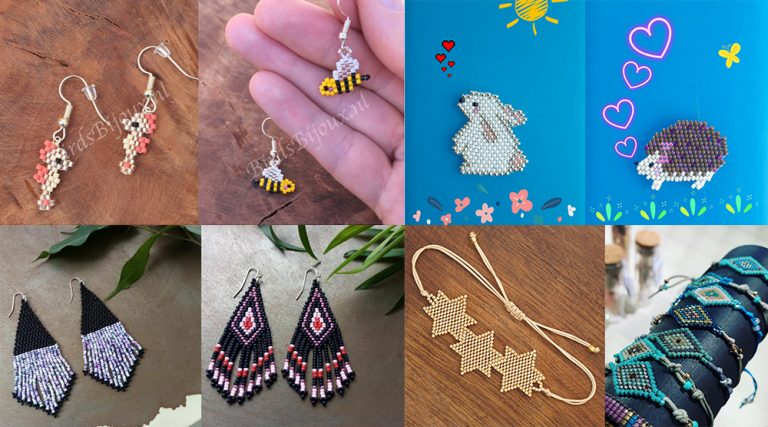
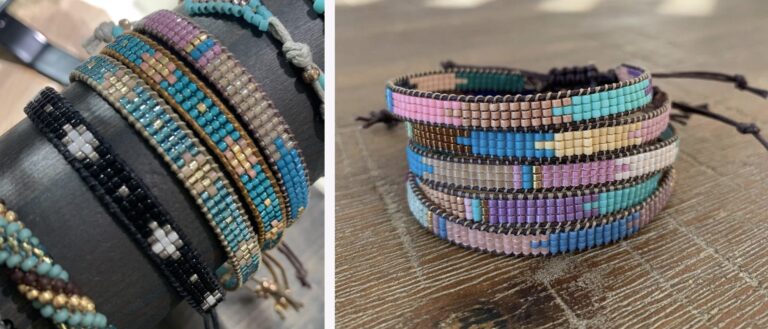
Loom Weaving (weaving on a bead loom)
- Due to their uniform shape, Delicas fit very evenly next to each other.
Herringbone
- Especially with Delicas, very neat and uniform.
- Can be used for flat bracelets, earrings, or three-dimensional shapes.

Stringing
- Great for narrow bracelets where the beads line up perfectly.
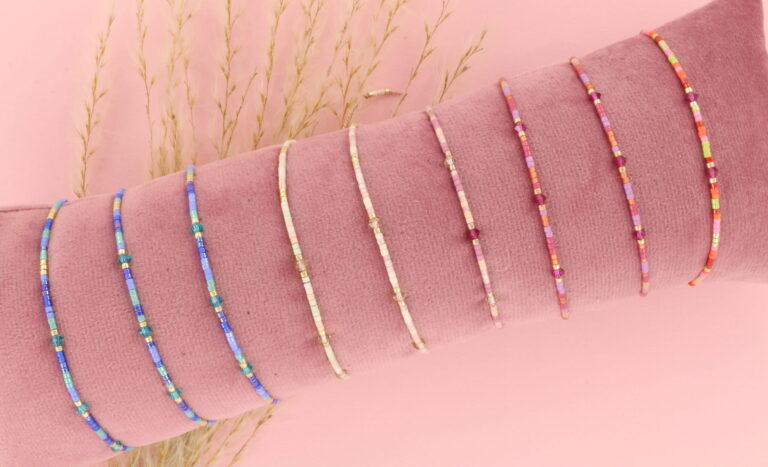
- Perfect for stringing on Griffin thread
Bead Embroidery
- Due to their precision, Delicas are perfect for stitching flat and even patterns onto fabric or leather.
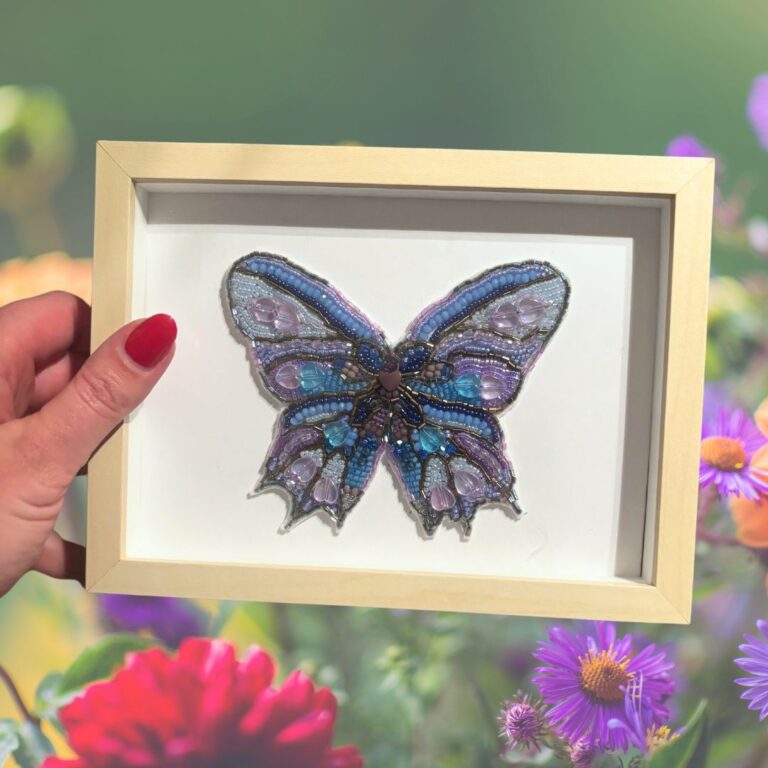
In short, Delicas are especially popular for techniques where precision, clean patterns, and geometric shapes are important.
Miyuki Rocaille
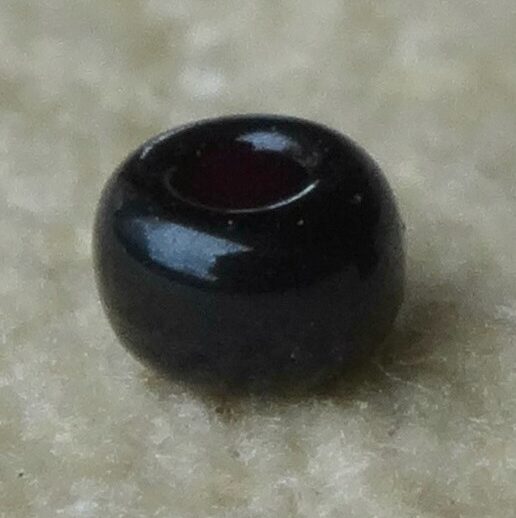
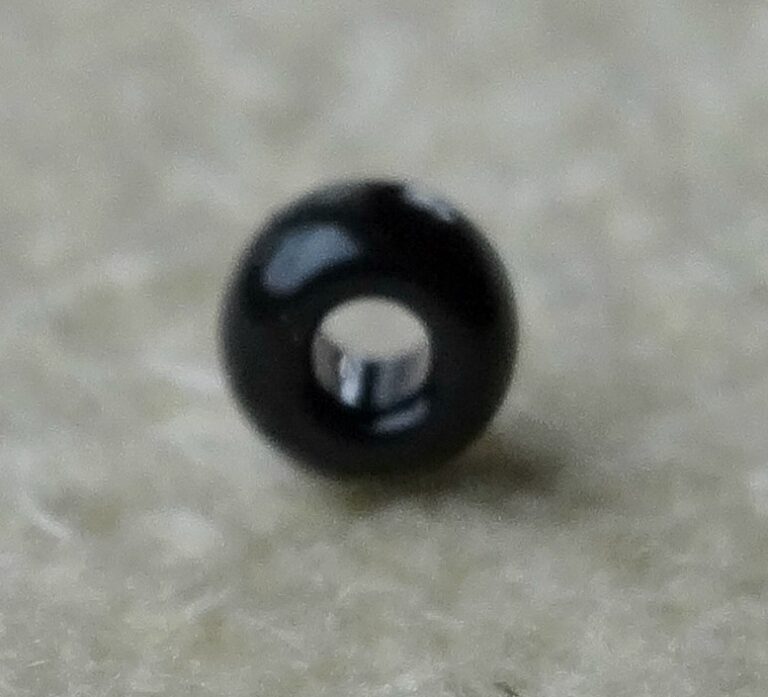
Rocailles are rounder, which you can easily remember with the mnemonic: “Rocailles have rounded edges.” A size 11/0 rocaille has a height of 2.1 mm and a width of 1.3 mm. It also has a hole of 0.8 mm, and with this size, you can easily thread through the bead multiple times.
Different sizes from large to small:
Miyuki Rocaille 5/0
- Hole: 1.8 mm
- Length: 3.5 mm
- Width: 5 mm
- Thickness: 5 mm
Miyuki Rocaille 6/0
- Hole: 1.6 mm
- Length: 3.3 mm
- Width: 4.3 mm
Miyuki Rocaille 8/0 (most commonly used)
- Hole: 1 mm
- Length: 2.1 mm
- Width: 3.1 mm
Miyuki Rocaille 11/0 (most commonly used)
- Hole: 0.8 mm
- Length: 1.3 mm
- Width: 2.1 mm
Miyuki Rocaille 15/0
- Hole: 0.6 mm
- Length: 1 mm
- Width: 1.6 mm
- Thickness: 1.6 mm
Suitable techniques for Miyuki Rocailles
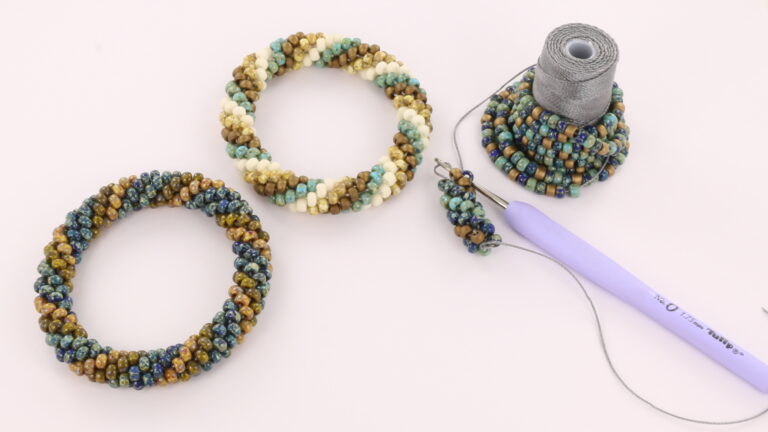
Bead Crochet
- Rocailles are very suitable for bead crochet using beading thread.
- Larger sizes (8/0 and 6/0) are mainly used for this. Size 11/0 is suitable once you have a bit more experience.
Herringbone
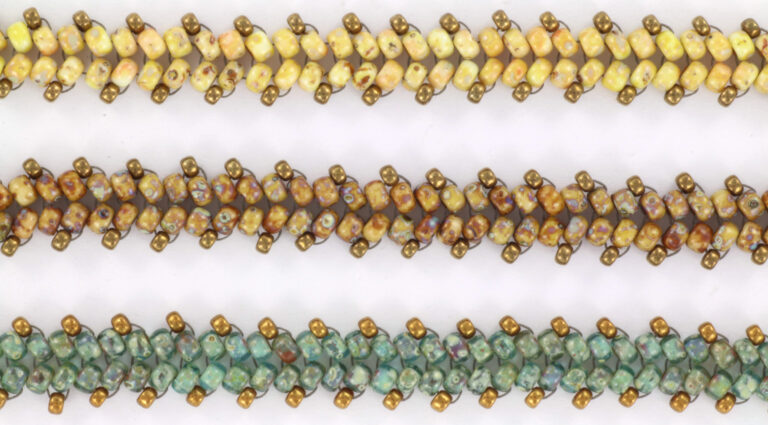
- The round beads fit nicely into the V-structure.
- Creates a more playful effect than with Delicas.
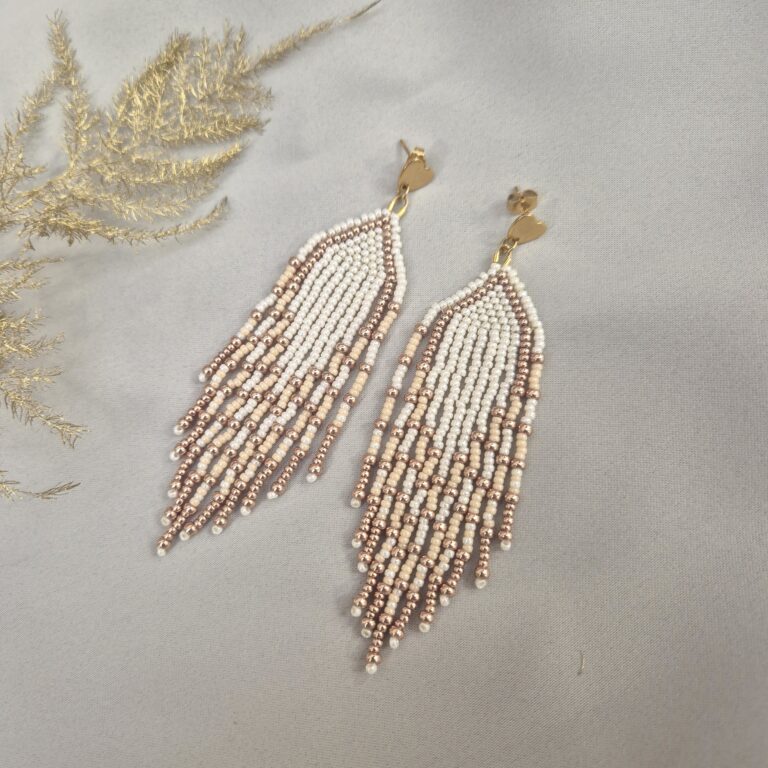
Fringe
- Due to their round shape, rocailles dangle very smoothly.
- Perfect for earrings, necklace pendants, or embellishments on clothing and bags.
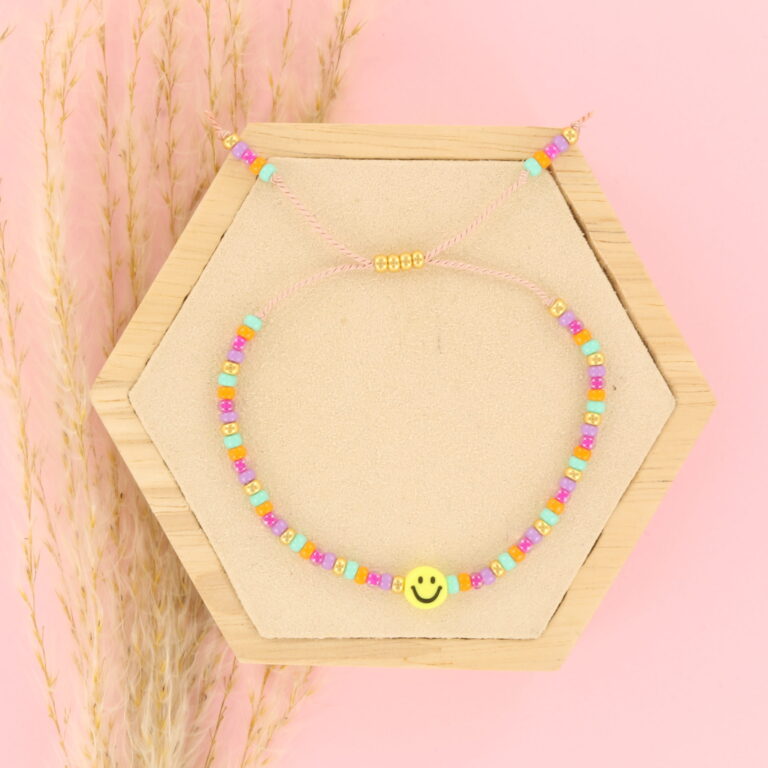
Stringing
- Often used in bracelets in all colors and sizes.
Flower Stringing
- Perfect for stringing on Griffin thread.
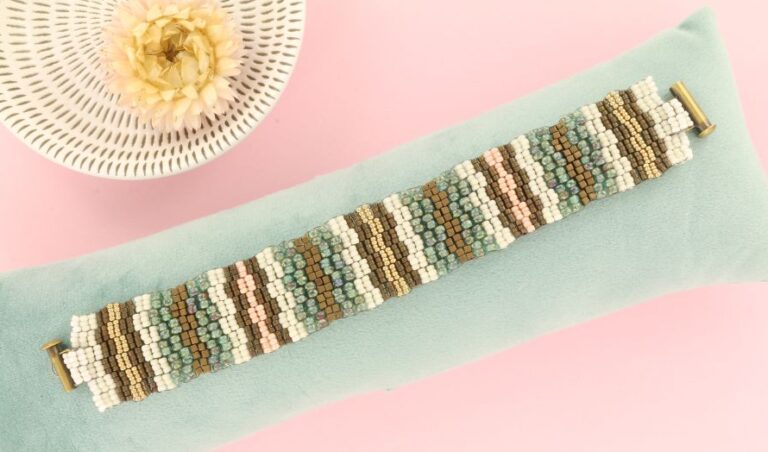
Peyote
- Peyote with a twist
- Bracelet Stringing
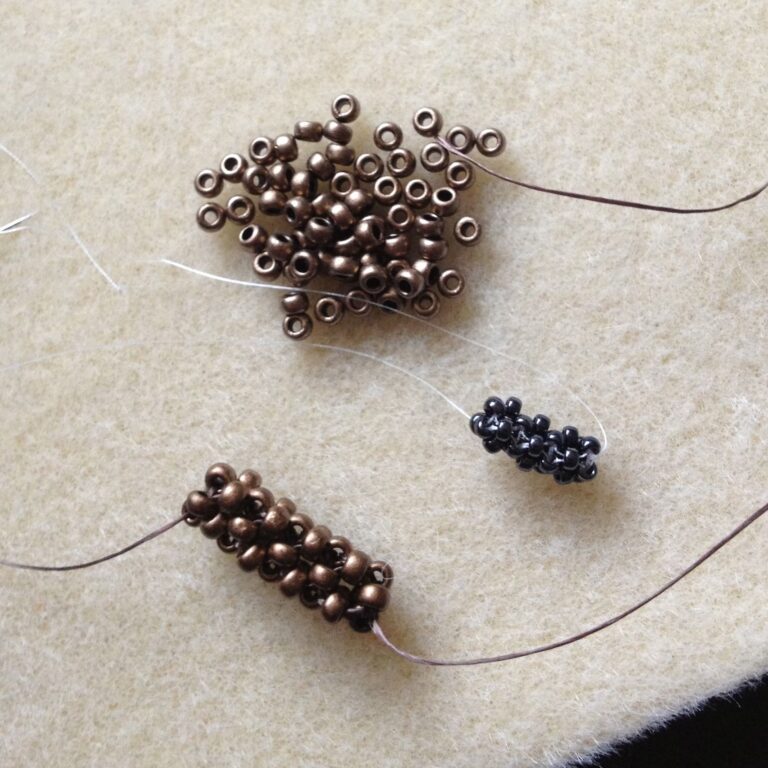
Right Angle Weave (RAW) & CRAW
- Rocailles fill the gaps very nicely.
- They give a softer appearance than Delicas.
- Suitable for bracelets, necklaces, and earrings.
Spirals
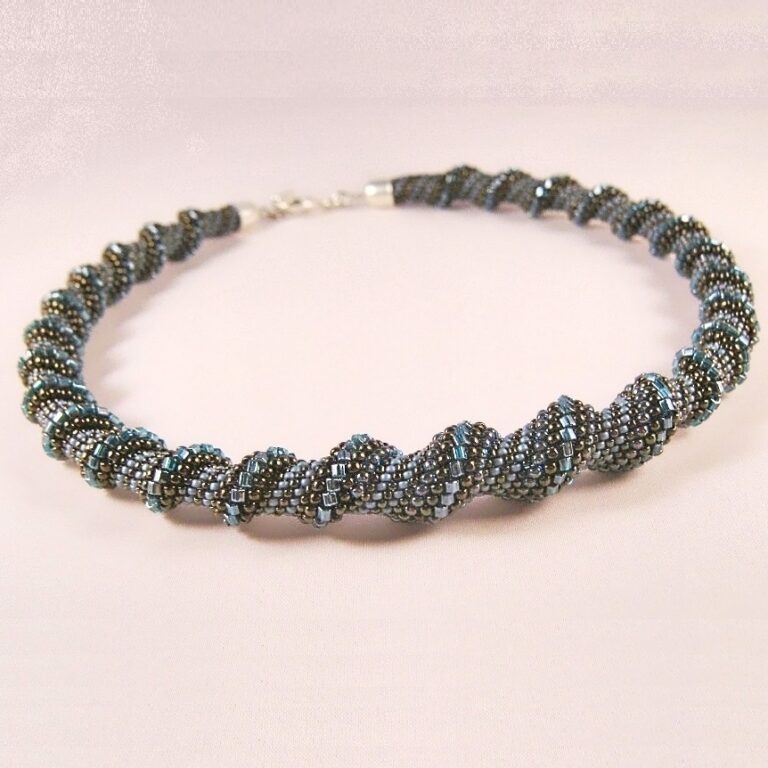
- Cellini Spiral: Rocailles in different sizes create beautiful wavy effects.
Bead Embroidery
- Larger and smaller rocailles create beautiful effects in embroidered patterns.
- They are often combined around cabochons or used as decorative edging.
Netting
- Ideal due to the round shape → airy, lace-like designs.
- Often used for necklaces, beaded collars, and floral motifs.
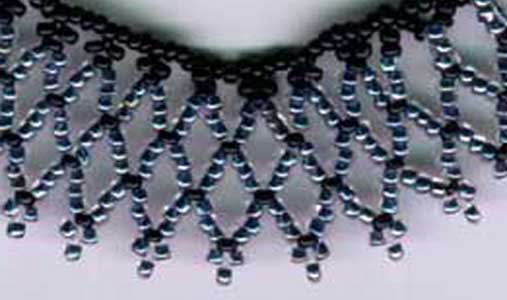
In short: while Delicas are ideal for precise, graphic patterns, rocailles are perfect for playful structures, spirals, netting, and organic designs.
What are good basic materials for beading?
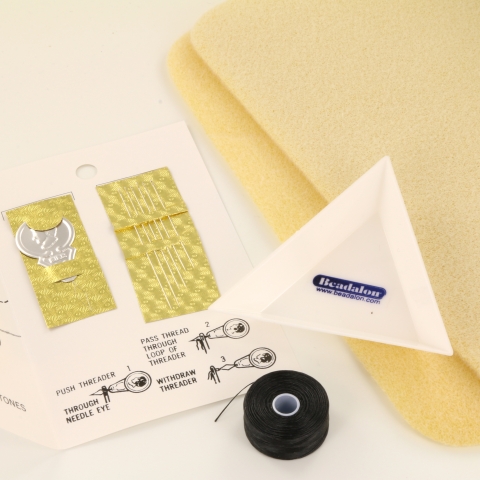
What I can recommend to everyone is a bead mat! Your beads won’t roll or jump away so easily, and you can pick them up very easily with your needle. Once you’re finished, you can easily collect the beads using the little triangles and then store them. Thanks to the triangles, the beads can be easily returned to the correct bag or compartment. Because the edge is sloped, the beads can also be picked up easily from, for example, a mat, so that they end up in the bead tray. This makes things much easier and also saves you from having to vacuum or pick up stray beads.
Miyuki needles are sturdy, multifunctional needles that are suitable for almost anything. Another option is Tulip needles. These are more expensive, but the eye is slightly larger, making it easier to thread, and the tip is less sharp.
If you only want to string beads without a special technique, the Beadalon Big Eye stainless steel needle (11.6 cm) is very convenient. Thanks to the large eye, you can also use elastic or other thicker threads. Additionally, the length of the needle allows you to string many beads at once, making the process faster.
You can order everything separately, but it’s also available as a complete kit: Basic Beading Kit – basics with beading thread.
Thread
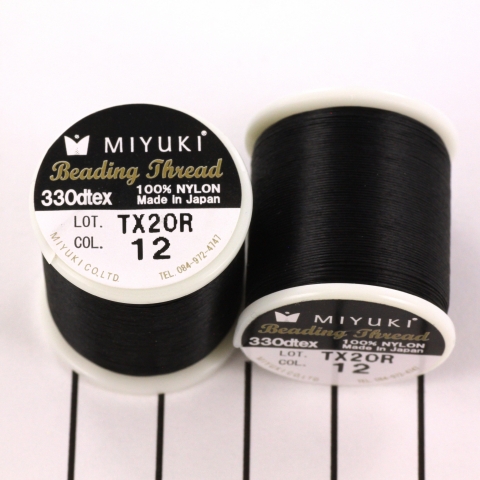
Miyuki and KO beading thread
Which thread is best to use, of course, depends on what you want to make and how sturdy it needs to be. Miyuki and KO are thin beading threads that are very strong and highly suitable for loom weaving, peyote, brick stitch, herringbone, and fringe techniques. They easily pass several times through the smaller Miyuki beads when used with Miyuki beading needles. Miyuki and KO threads are very similar, but differ slightly in color options.
- Loom weaving
- Peyote
- Brick stitch
- Herringbone (feels a bit loose after stringing; for a firmer result, FireLine is a better choice)
- Fringe (the thin thread makes the fringe hang very smoothly)
Miyuki beading thread is ideal for fine weaving and stringing techniques with Delicas and rocailles. It is strong, flexible, and colorfast, but less wear-resistant than FireLine, especially with sharp-edged beads or heavy use.
Fireline
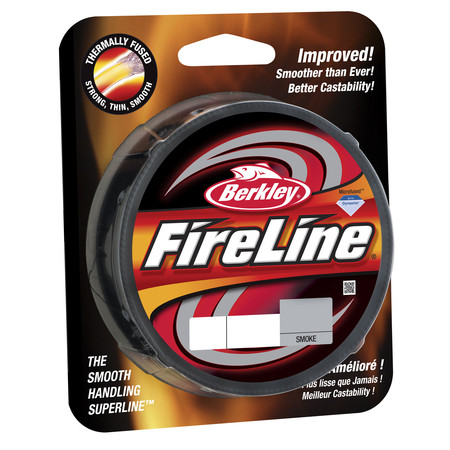
Fireline is originally a fishing line, but because it is very strong and flexible, it is also highly suitable for making jewelry. FireLine is available in the colors Crystal (white) and Smoke (gray). Crystal is best for lighter colors, and gray for darker colors, especially if you don’t want the thread to be very visible.
- Stringing bracelets such as flowers and stars
- Stringing necklaces
- Herringbone
- Brick stitch earrings for a slightly firmer result; otherwise, regular beading thread also works
- Ladder stitch
The thinnest option is 0.08 mm, which is very suitable for small and very precise work. Naturally, this makes it a bit more fragile. Still, FireLine is always very reliable because it is made of nylon. The thickest option is 0.2 mm, which is extra strong and great for 3D objects or stringing projects that you want to frame. Keep in mind, however, that it is harder to pass multiple times through the same bead due to its thickness. The most commonly used thicknesses are 0.12 mm and 0.15 mm. Some needles even have a small eye for this FireLine, but a tip is to gently flatten the FireLine with pliers or your nails so that it fits through the needle.
FireLine is more expensive than regular beading thread, but many beaders specifically choose it and won’t use anything else. Your bracelets or necklaces made with FireLine will also be firmer and more compact because the thread is slightly sticky and very strong, so it doesn’t break easily. FireLine is especially useful for 3D objects or projects you want to frame. You do need to be careful with Swarovski or Preciosa bicones, as the inside of these beads can unfortunately cut through the thread.
When do you choose beading tread and when do you choose fireline?
The biggest difference between beading thread and FireLine is that beading thread has a tiny bit of stretch, whereas FireLine does not. In some beading techniques, for example peyote with Delicas, you won’t notice the difference. In others, you will:
- For example, if you’re working in a circle with brick stitch, a little give/stretch is helpful, and stringing with beading thread feels nicer.
- If you’re making fringe earrings, it’s better to use beading thread so the fringe hangs more smoothly.
- If you’re doing peyote with larger beads and need to pull extra tight, FireLine works better.
Ultimately, it’s mostly personal preference, and it also depends on whether you naturally pull very tight or string more loosely.
Beading Cord
C-Lon bead cord is a thicker, sturdier thread suitable for micro-macramé, crochet, kumihimo, or simply stringing or adding fun details in weaving. It is made of nylon and can therefore be melted easily using a thread burner or lighter. It works beautifully with Miyuki rocailles, creating a very fine, detailed effect. We sell this beading cord in the following thicknesses: 0.3 mm, 0.4 mm, 0.5 mm, and 0.9 mm. The most popular thickness is 0.5 mm.
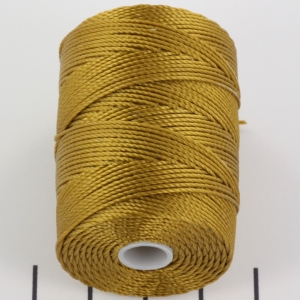
0.5 mm Beading Cord
- Micro-macramé / knotting
- Crochet with beads
- Kumihimo
Elastic
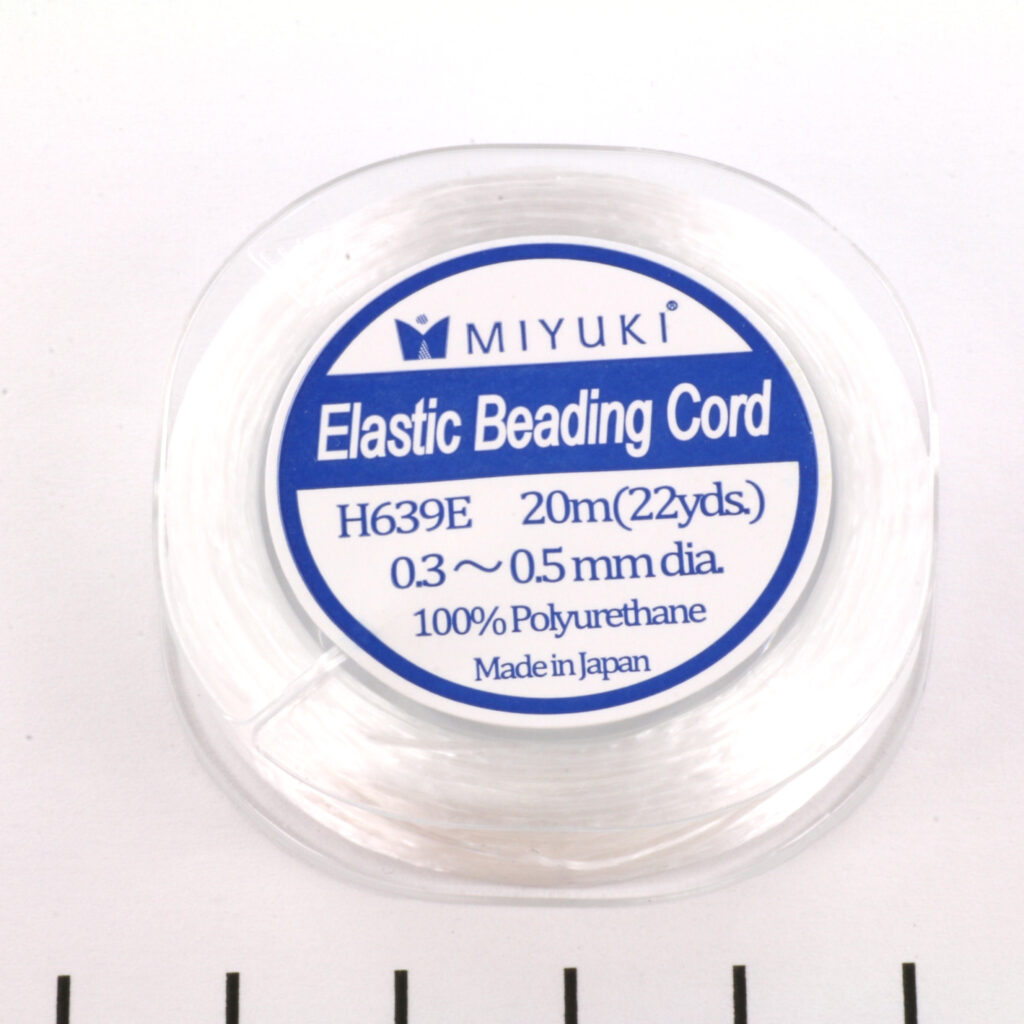
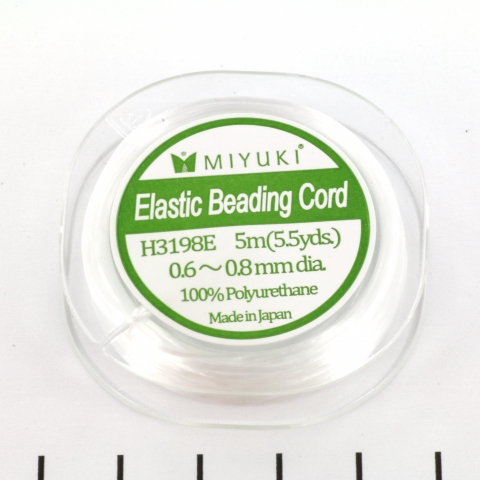
This elastic beading cord from Miyuki is very strong and flexible. The thin 0.3 to 0.5 mm is especially suitable for tilas, while the thicker 0.6–0.8 mm works well for larger rocailles.
Stringing bracelets
Stringing flowers, bees, or cherries
Stringing with Miyuki tilas
Griffin
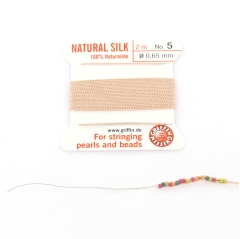
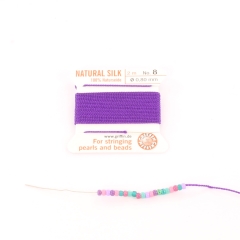
Griffin is a well-known brand of high-quality thread with over 150 years of experience. During production, Griffin beading cords are given the precise number of twists under optimal tension to prevent fraying, tangling, or knotting later on. Thanks to the special needle attached to the Griffin beading cord, you don’t have to struggle with the tricky task of threading a needle. There is no easier or faster way to string pearls, stones, or glass beads.
What we especially like about this thread is that, because the needle seamlessly transitions into the thread, it can pass twice through a Delica 11/0 or Rocaille 8/0, allowing you to create a sliding closure.
Silk Thread with 0.65 mm Needle – perfect for Delicas
Silk Thread with 0.80 mm Needle – perfect for Rocaille 8/0
There is still so much to discover about creating with Miyuki beads—the possibilities are truly endless, and the techniques continue to evolve. We hope that you now have a better understanding of the beads, materials, and possibilities. Tip: start by learning simple basic techniques, such as brick stitch, peyote, and herringbone. Once you have mastered these techniques, you will recognize them in many creations, and with some practice, it will become easier to make more complex patterns. In the beginning, it is also important to become familiar with the beads, thread, and needle.
We wish you lots of creative fun!